PC Photochromic Diamond Sunglasses: Material Structure, Lens Function, and OEM/ODM Development Guide
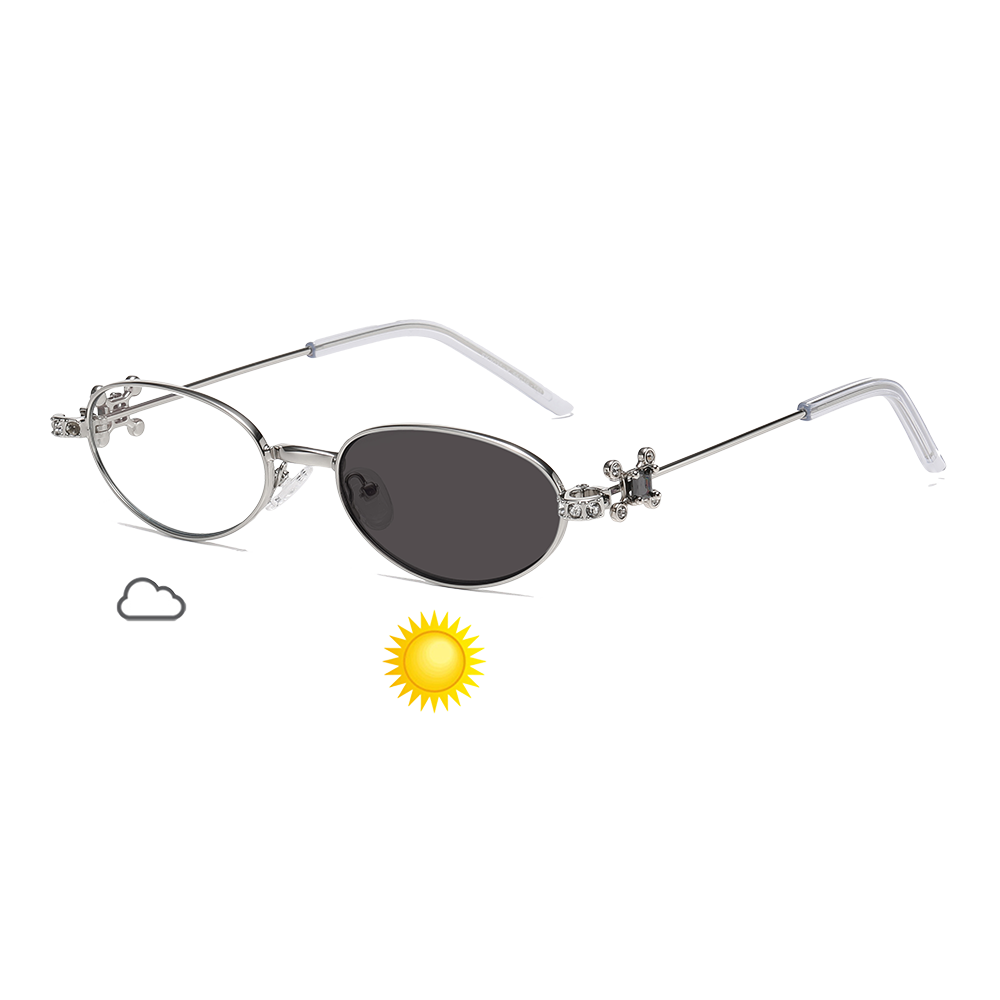
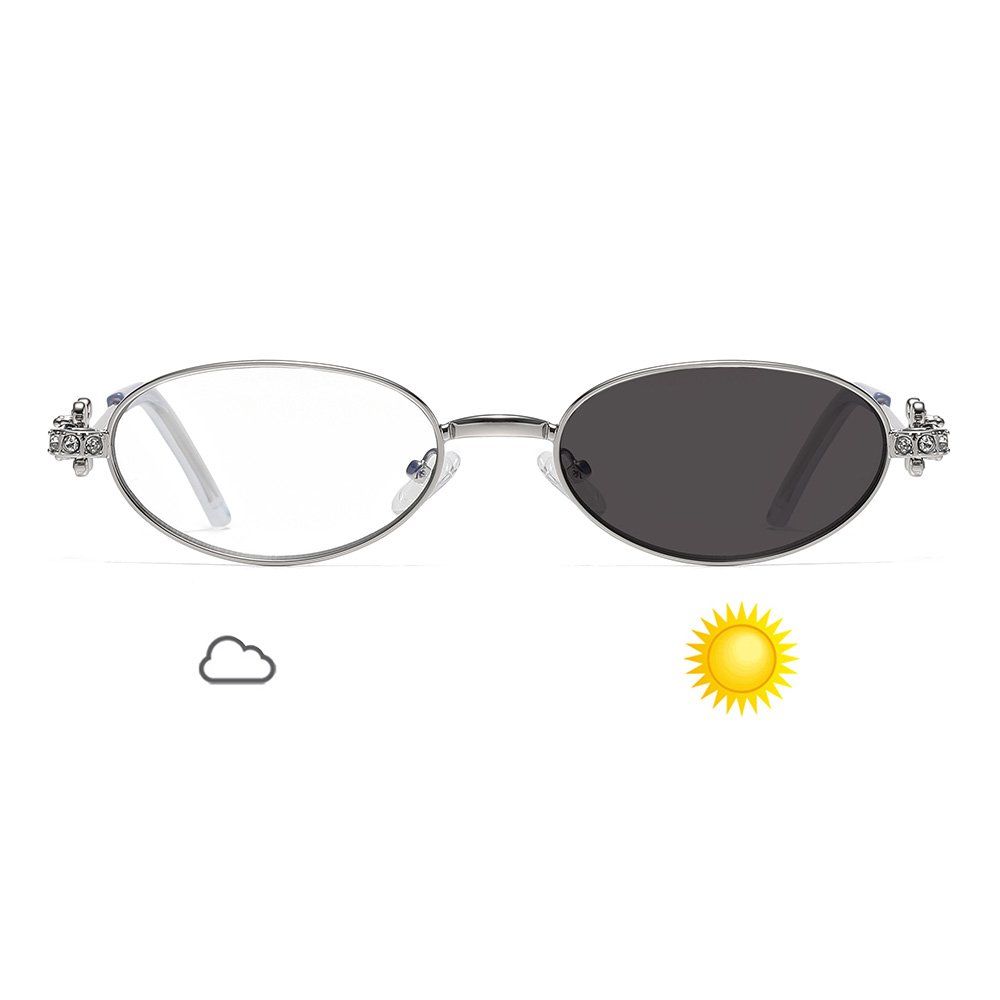
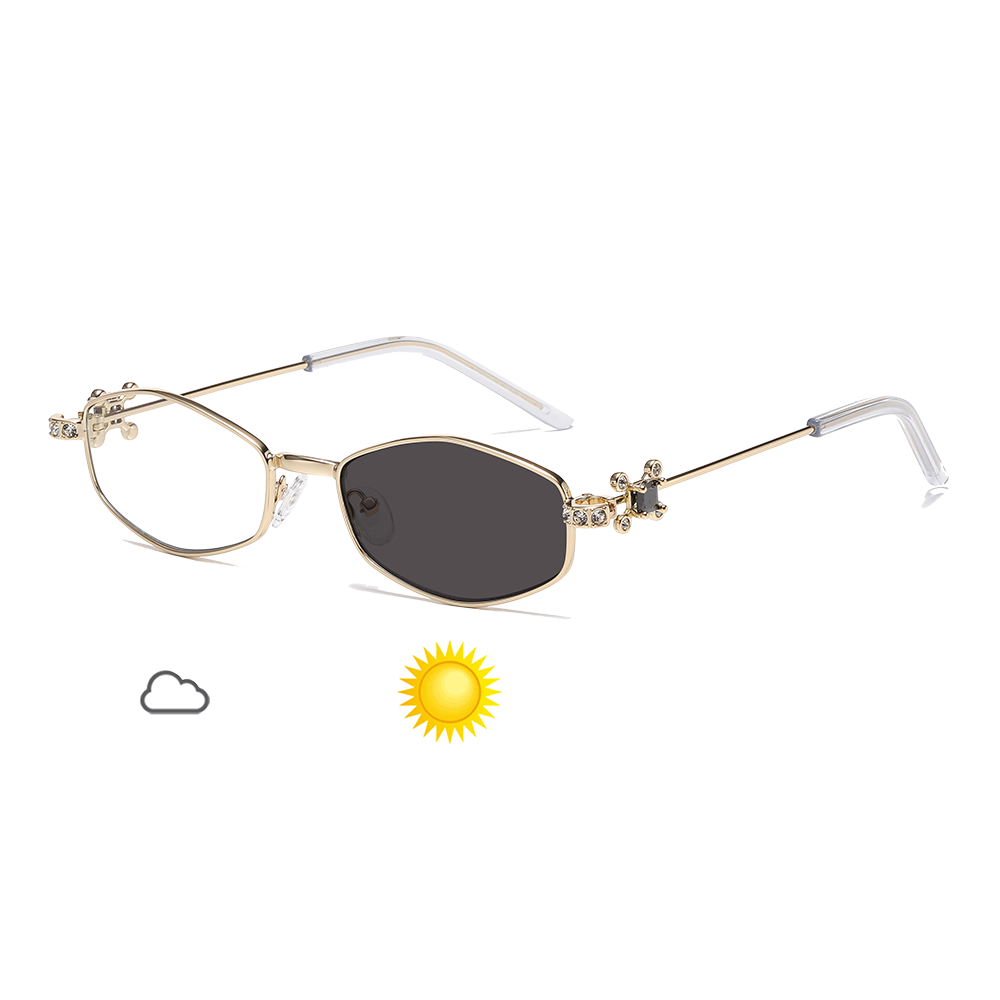
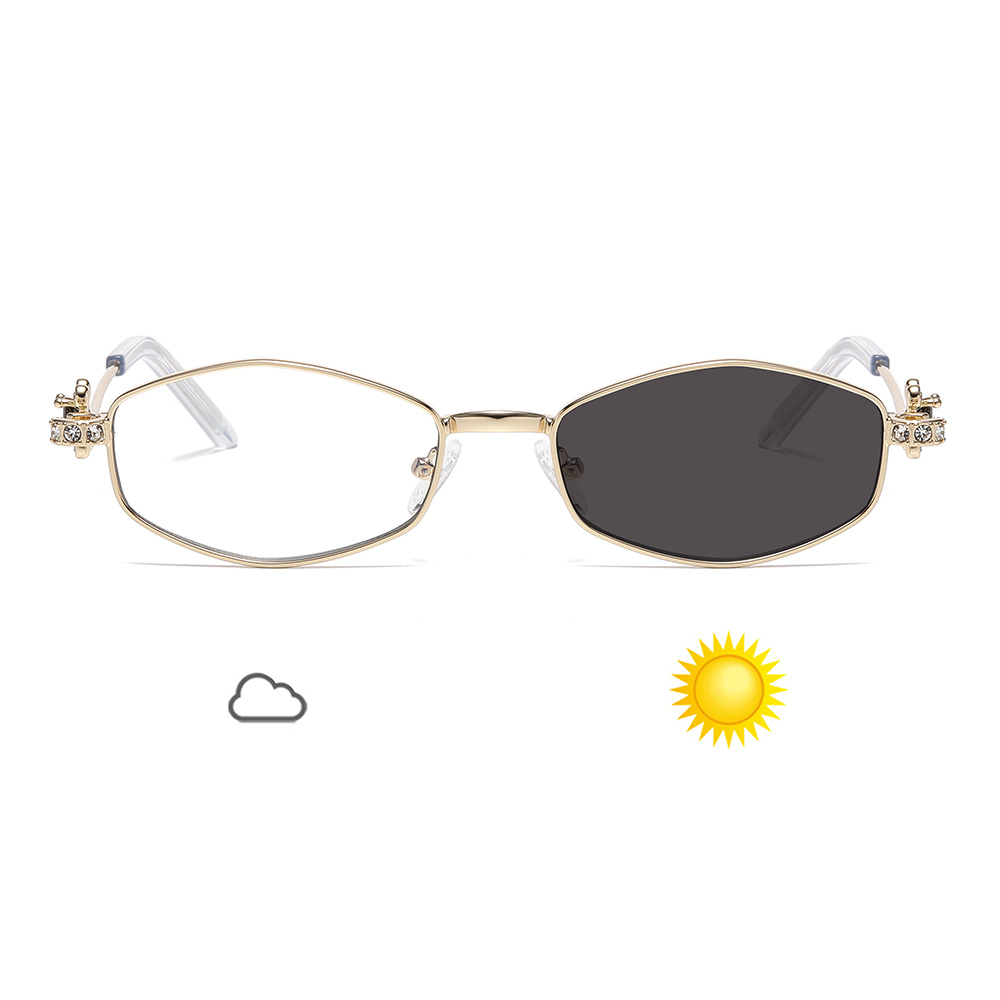
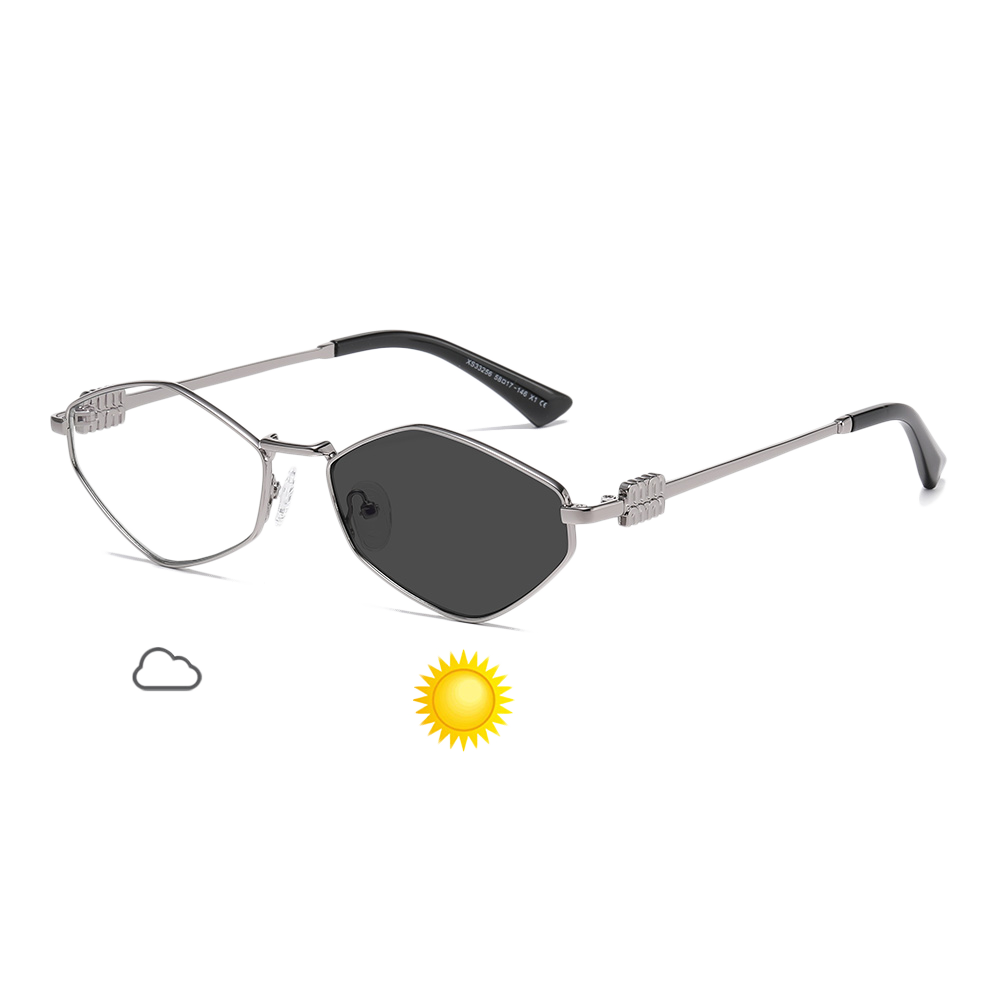
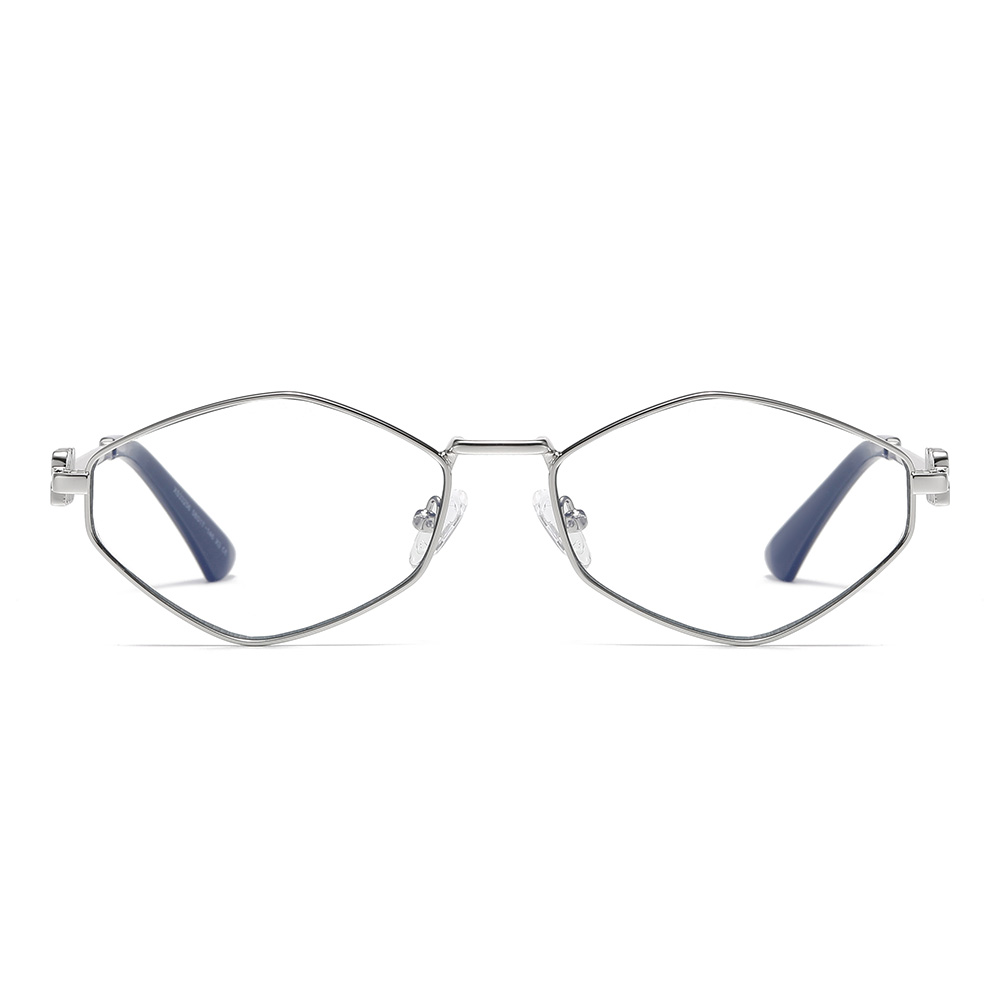
PC Photochromic Diamond Sunglasses combine PC photochromic lenses, a metal frame, and diamond-style decorative elements in one eyewear design. Each component has a different role. The PC lens provides a lightweight base, while the photochromic function changes the lens tint in response to UV exposure. The metal frame forms the main supporting structure and creates clean, defined lines. Diamond-style details give the finished sunglasses a more recognizable fashion identity.
For Zhansheng PC Photochromic Diamond Sunglasses represent a product direction where lens performance, frame construction, decorative design, surface treatment, and assembly need to be developed together.
PC Photochromic Diamond Sunglasses: Definition and Product Positioning
PC Photochromic Diamond Sunglasses are more than ordinary sunglasses with added decoration. Their product identity comes from the combination of Polycarbonate Photochromic Lenses, a metal frame structure, and diamond-style or rhinestone-style details.
The complete product can be examined through several connected layers:
- PC photochromic lenses provide the lens structure, support lightweight eyewear development, and change tint according to UV exposure.
- Photochromic technology allows the lenses to become darker under stronger UV conditions and return to a lighter state when UV exposure is reduced.
- Stainless steel frame construction supports the lenses and gives the sunglasses a defined metallic outline.
- Diamond-style embellishments add brightness and decorative recognition around selected frame areas.
- Assembly structure connects the lenses, rims, bridge, hinges, temples, and decorative elements into one wearable product.
The main product components are outlined below:
| Component |
Main Function |
Development Focus |
Sample Confirmation Points |
| PC Photochromic Lens |
Provides the lens structure and tint-changing function |
Photochromic response, lens color, curve, and UV specification |
Color-change conditions, clarity, and rim fit |
| Stainless Steel Frame |
Supports the lenses and forms the metal outline |
Rim shape, bridge proportions, and temple connection |
Symmetry, structural condition, and wearing position |
| Diamond-Style Decoration |
Adds visual detail and product recognition |
Placement, arrangement, brightness, and density |
Fixing condition, left-right consistency, and surface quality |
| Surface Finishing |
Defines the overall appearance |
Gloss level, metal color, coating, and decorative coordination |
Color differences, scratches, marks, and finish consistency |
| Assembly Structure |
Brings all components together |
Lenses, rims, hinges, temples, and decoration |
Balance, temple opening, alignment, and fit |
Compared with standard PC sunglasses, this category requires more attention to the lens tint transition and decorative appearance. Compared with conventional photochromic sunglasses, it also introduces additional inspection points, including decoration placement, fixing condition, surface contact, frame weight, and overall visual balance.
The product should therefore be positioned according to its complete construction. Focusing only on the photochromic feature or decorative appearance may overlook structural details that influence the final result.
Why PC Lenses Are Suitable for Photochromic Sunglasses
PC is the common abbreviation for polycarbonate. In eyewear manufacturing, PC lenses are widely considered for products that require relatively low lens weight, adaptable shaping, and practical impact resistance.
For Photochromic PC Sunglasses, the material can be combined with light-responsive technology so that the lens tint changes as outdoor UV conditions change.
PC lenses are commonly considered for this category because:
- They can help control the total weight of the finished sunglasses.
- They are suitable for different lens shapes and frame designs.
- They provide practical impact resistance for daily, travel, and outdoor products.
- They can be developed with a photochromic function.
- They can be produced in different color directions and surface configurations.
These characteristics provide useful flexibility during product development. A factory can adjust the lens shape, size, curve, tint, and edge according to the selected metal frame.
However, PC lenses should not be described as unbreakable. Their actual performance depends on lens thickness, curvature, edge processing, surface treatment, frame construction, assembly condition, and the environment in which the sunglasses are used.
The following table summarizes several lens-related development points:
| Lens Element |
Influence on Product |
Procurement Confirmation Advice |
| Lens Material |
Influences weight, structure, and wearing feel |
Confirm that the selected lens is PC |
| Lens Thickness |
Affects rim fitting, edge appearance, and overall weight |
Review it together with the metal rim |
| Lens Curve |
Influences frame compatibility and front-view styling |
Confirm against the frame shape and approved sample |
| Photochromic Performance |
Determines the change between lighter and darker lens states |
Observe samples under different UV and light conditions |
| UV Specification |
Relates to the lens’s ultraviolet protection |
Confirm from the applicable technical specification |
| Surface Treatment |
May influence clarity, maintenance, and handling |
Confirm AR, anti-fog, oleophobic, or hydrophobic options where required |
During product evaluation, the lenses should not be reviewed separately from the frame. A lightweight PC lens does not automatically guarantee balanced sunglasses. Metal rims, decorative pieces, hinges, and temple construction also contribute to total weight and wearing comfort.
How Photochromic Technology Works
Photochromic technology enables a lens to change tint in response to UV exposure. Under stronger outdoor UV conditions, the lens generally becomes darker. When the wearer moves indoors or enters an environment with less UV exposure, the lens gradually becomes lighter.
The speed and depth of this change may be affected by:
- UV intensity
- Ambient temperature
- Lens material
- Initial lens color
- Type of photochromic technology
- Lens thickness
- Coating or surface treatment
- Actual wearing conditions
The lens may not respond in exactly the same way every time or in every environment. Temperature, weather, season, location, and the amount of direct UV exposure can all influence the visible result.
Procurement teams should also understand the limitations of photochromic lenses inside vehicles. Many car windshields filter a portion of UV light. As a result, some photochromic lenses may darken more slowly or may not reach the same dark state inside a car as they would outdoors in direct UV exposure.
For driving-related product development, buyers should examine lens color, visible light transmission, possible polarized options, and relevant local regulations before confirming the specification.
Photochromic performance, UV protection, and polarization are different lens characteristics:
| Function Dimension |
Meaning |
Procurement Evaluation Point |
| Photochromic |
Lens tint changes according to UV conditions |
Compare the light and dark states under different UV levels |
| UV Protection |
Lens filters ultraviolet radiation according to its specification |
Confirm UV400 or another applicable UV requirement |
| Polarized |
Reduces certain reflected glare |
Verify whether polarization is included in the selected lens |
| Lens Color |
Defines the visual tone before and after activation |
Confirm both the lighter and darker color states |
| Coating |
Adds a specified surface treatment or function |
Confirm the exact coating configuration for the project |
A photochromic lens is not necessarily polarized. Likewise, a lens may provide UV protection without having a photochromic function.
For clear procurement communication, the specification should list the photochromic response, UV requirement, polarization, lens color, and surface coating separately. Combining these terms into one general description can create misunderstandings during sampling and production.
Design Value of Diamond-Style Embellishments
Diamond-style embellishments add brightness, texture, and recognizable fashion detail to the sunglasses. Depending on the frame design, these decorations may be positioned around the lens rim, along the temples, near the bridge, at the frame corners, or on selected metal components.
Common product descriptions may include:
- Diamond-style embellishment
- Rhinestone-style decoration
- Faceted crystal-style detail
- Decorative frame stone
- Bright accent detail
These terms describe an appearance direction. They do not necessarily mean that the product contains genuine diamonds. The actual decorative material, size, color, shape, and fixing method should be confirmed through the product specification and approved sample.
The purpose of decoration is not simply to use as many bright elements as possible. Good decorative design depends on proportion and placement. The details should support the frame shape without interfering with lens installation, temple movement, hinge operation, bridge structure, or wearing stability.
| Decoration Position |
Visual Effect |
Factory Inspection Focus |
| Around Lens Rim |
Creates a more noticeable front-view appearance |
Spacing, arrangement, fixing condition, and consistency |
| Outer Temple Area |
Adds stronger side-view detail |
Left-right positioning, alignment, and surface flatness |
| Bridge Area |
Introduces a central decorative accent |
Clearance and compatibility with the bridge construction |
| Corner Area |
Strengthens fashion recognition around the frame edges |
Lens-edge clearance and structural interference |
| Local Metal Part |
Creates more visual layers within the metal structure |
Color matching and coordination with the complete frame |
During sample review, the decorations should be inspected from both visual and structural perspectives. A detail that appears attractive in photographs may feel rough, sit unevenly, or add unwanted weight when examined on the physical product.
The inspection should therefore cover fixing stability, arrangement, tactile condition, color consistency, left-right balance, and the relationship between the decoration and the rest of the frame.
Role of Stainless Steel Frame in PC Photochromic Diamond Sunglasses
A stainless steel frame can provide structural support, defined lines, and a refined metallic appearance. In PC Photochromic Diamond Sunglasses, the metal frame acts as the link between the functional lenses and the decorative design.
The frame structure should be reviewed through several areas:
- Rim shape
- Rim thickness
- Bridge width and height
- Temple connection
- Hinge position
- Decorative fixing points
- Surface treatment
- Left-right symmetry
- Wearing balance
A thinner metal profile can create a light and refined appearance, while a more visible rim may provide additional space for decorative details. The appropriate direction depends on lens dimensions, frame geometry, target style, decoration density, and the required wearing position.
Stainless steel should not be described as permanently corrosion-free or automatically durable in every condition. Its actual performance is influenced by the selected material specification, structural design, surface treatment, storage conditions, exposure environment, maintenance, and assembly quality.
The relationship between the metal rim and PC lens is particularly important. The rim contour, lens curve, edge profile, and installation dimensions must correspond correctly.
If these elements do not match, the finished sunglasses may show uneven lens positioning, excessive assembly tension, visible gaps, or instability around the rim. The lens and frame should therefore be evaluated as one assembly rather than as independent parts.
Manufacturing and Sample Confirmation Points
From a factory perspective, PC Photochromic Diamond Sunglasses involve several connected production processes. Lens fitting, metal-frame construction, decorative installation, surface finishing, hinge assembly, and final inspection must all follow the approved design.
Lens Fitting
Lens fitting should be checked according to lens dimensions, curve, edge treatment, and compatibility with the metal rim.
A correctly fitted lens contributes to both appearance and structural stability. The lens should sit in the intended position without obvious gaps, uneven pressure, or visible distortion in the frame.
When the lens curve does not match the rim, assembly may create unwanted tension. This can affect frame symmetry, lens position, and the front-view appearance of the finished sunglasses.
The factory should inspect:
- Lens width and height
- Lens-edge profile
- Lens thickness
- Front curvature
- Position within the rim
- Left-right consistency
- Lens orientation
- Condition after full assembly
Rim Structure
The metal rim holds the PC lens and defines the front outline of the sunglasses. Its geometry affects lens security, frame appearance, and overall stability.
For diamond-style designs, decorative elements may also be installed on or near the rim. Their size and position need to be planned without reducing the space required for lens fitting.
Inspection should focus on rim symmetry, shape, thickness, closure condition, and the relationship between the rim and lens edge. Decoration should not create pressure on the lens or interfere with assembly tools and connection points.
Bridge Structure
Bridge width, height, and curvature influence how the sunglasses sit on the wearer’s face. The bridge also affects the distance between the lenses, lens height, and the overall front-frame position.
During sample confirmation, the bridge should be reviewed together with:
- Overall frame width
- Lens height
- Lens spacing
- Nose support structure
- Front angle
- Temple position
A visually attractive bridge may still require adjustment if the sunglasses sit too high, too low, too close, or too far from the face.
Temple Structure
Temple length, curvature, opening angle, and decorative details all influence wearing balance.
Where decorations are added to the temples, their position and weight should be considered during development. A temple with heavy decorative details may change side balance or create additional pressure behind the ears.
The temple structure should therefore be assessed together with:
- Front-frame weight
- PC lens size
- Decoration density
- Hinge location
- Temple thickness
- Ear-end shape
- Intended wearing fit
The left and right temples should open consistently and return to the approved position without visible deviation.
Decoration Fixing
Diamond-style decorations require careful control of placement, surface condition, attachment, and left-right consistency.
During sample inspection, the factory and buyer should review:
- Decorative material
- Number and spacing of decorative pieces
- Position against the approved design
- Fixing condition
- Surface smoothness
- Color and brightness consistency
- Clearance around lenses and hinges
- Left-right arrangement
Decorations should not interfere with hinge movement, temple folding, lens fitting, or normal handling. Any requirement relating to fixing strength or surface durability should be clearly included in the project specification and evaluated through the appropriate inspection method.
Surface Finishing
The metal frame, PC lenses, and decorative components have different surface characteristics. They should still appear coordinated when assembled into one product.
Inspection points may include:
- Metal color
- Gloss level
- Coating condition
- Lens-surface clarity
- Scratches or handling marks
- Decorative brightness
- Color differences
- Edge condition
- Overall visual consistency
Where AR, anti-fog, oleophobic, or hydrophobic treatments are requested, they should be confirmed individually. These treatments should not be assumed to be included in every PC photochromic lens.
Physical samples should be reviewed under suitable and consistent lighting, as photographs may not accurately show gloss, metallic color, lens transparency, or decorative brightness.
Assembly Inspection
The following checklist can help procurement and product teams review the sample in a more consistent manner:
| Inspection Item |
What to Check |
Impact |
| Lens Installation |
Lens-to-rim fit, position, and edge condition |
Influences stability and front-view appearance |
| Photochromic Effect |
Tint change under different UV and light conditions |
Affects the intended wearing experience |
| UV Specification |
Confirm according to the actual lens documentation |
Relates to ultraviolet protection |
| Frame Symmetry |
Left-right rim, bridge, and temple alignment |
Influences appearance and wearing balance |
| Decoration |
Arrangement, fixing, surface condition, and consistency |
Affects visual quality and handling |
| Hinge Connection |
Opening movement and left-right consistency |
Influences daily use and temple alignment |
| Bridge Structure |
Height, width, angle, and position |
Affects how the frame sits on the face |
| Surface Finishing |
Metal tone, lens condition, and decorative appearance |
Determines the overall finish |
A sample should always be inspected as a complete pair of sunglasses. The weights of the lenses, metal frame, temples, hinges, and decorative pieces all influence the finished wearing balance.
Reviewing each component separately is useful, but it cannot replace inspection of the fully assembled product.
Suitable Product Directions for PC Photochromic Diamond Sunglasses
PC Photochromic Diamond Sunglasses can support several market and design directions. Their final suitability depends on lens behavior, frame geometry, decorative density, total weight, and the intended wearing environment.
| Product Direction |
Why It Fits |
Development Notes |
| Fashion Sunglasses |
Diamond-style details create a recognizable design feature |
Control decoration density, placement, and total weight |
| Travel Sunglasses |
Photochromic lenses can respond to changing outdoor UV conditions |
Confirm color-change behavior, storage, and wearing balance |
| Daily Commuting Sunglasses |
Users may frequently move between indoor and outdoor environments |
Consider reduced photochromic response inside vehicles |
| Outdoor Sunglasses |
PC lenses and photochromic technology support outdoor product development |
Confirm UV specification, tint range, and lens clarity |
| Decorative Sunglasses |
Bright details provide stronger styling and product differentiation |
Check fixing condition and surface consistency |
| Light-Adaptive Sunglasses |
Photochromic performance forms the main product feature |
Evaluate response under realistic UV conditions |
| Women’s Fashion Sunglasses |
Decorative elements can support more expressive styling |
Match the frame size, decoration, and intended face fit |
| Metal Frame Photochromic Sunglasses |
Metal outlines create a clean and refined appearance |
Review rim connection, hinge structure, and finishing |
| Rhinestone Photochromic Sunglasses |
Rhinestone-style details add brightness and visual recognition |
Inspect placement, consistency, and stability |
These are product-development and market-positioning references. They should not be presented as medical claims.
Photochromic sunglasses are not intended to treat eye conditions, cure disease, or provide medical improvement. Product descriptions should remain focused on the confirmed lens function, frame construction, appearance, and intended use.
PC Photochromic Diamond Sunglasses vs. Standard PC Sunglasses
The main differences between PC Photochromic Diamond Sunglasses and standard PC sunglasses involve the tint-changing function, decorative structure, frame configuration, and number of inspection points required during sample approval.
| Comparison Item |
PC Photochromic Diamond Sunglasses |
Standard PC Sunglasses |
| Lens Material |
PC photochromic lens |
PC or another selected lens material |
| Color-Change Function |
Tint changes in response to UV exposure |
Usually uses a fixed lens tint |
| Decoration |
May include diamond-style or rhinestone-style details |
Decoration is limited or depends on the model |
| Frame Structure |
Commonly developed with a metal frame |
May use PC, metal, or another frame material |
| Use Scenario |
Outdoor, travel, commuting, and fashion use |
Conventional sun protection or styling |
| Development Focus |
Photochromic behavior, decoration, frame structure, and balance |
Lens color, frame design, fit, and appearance |
| Sample Confirmation |
Includes tint response, decoration, assembly, and wearing checks |
Mainly covers the lenses, frame, and assembly |
PC Photochromic Diamond Sunglasses are not automatically suitable for every customer, sales channel, or wearing situation.
Their final product value should be judged through the confirmed lens specification, color-change conditions, frame construction, decoration material, total weight, surface quality, and assembly consistency.
How to Choose PC Photochromic Diamond Sunglasses
For overseas buyers and product developers, selection should begin with a clear market position. The sunglasses may be intended for fashion collections, travel products, outdoor use, commuting, or decorative eyewear.
Once the product direction has been defined, the following points should be confirmed:
- Verify that the selected lenses are PC photochromic lenses.
- Observe the photochromic response under different UV conditions.
- Confirm whether UV400 or another UV specification is required.
- Decide whether polarization is needed as an additional function.
- Review the material, position, density, and fixing method of the diamond-style decoration.
- Check the metal frame, rims, bridge, hinges, and temples.
- Confirm the lens color in both its lighter and darker states.
- Inspect surface finishing and decorative consistency.
- Evaluate wearing balance and left-right symmetry.
- Approve the physical sample before mass production.
The checklist below provides a practical reference:
| Confirmation Item |
What to Confirm |
Advice |
| Lens Material |
Whether the selected lens is PC |
Use the approved specification as the reference |
| Photochromic Effect |
Tint range, response conditions, and recovery |
Observe physical samples under appropriate UV conditions |
| UV Protection |
Whether UV400 or another UV requirement applies |
Confirm through actual lens data or applicable documentation |
| Frame Material |
Stainless steel or another specified metal |
Verify against the design and bill of materials |
| Decoration |
Material, position, arrangement, and fixing condition |
Inspect the assembled sample closely |
| Lens Color |
Appearance before and after darkening |
Coordinate both states with the frame and decoration |
| Temple Design |
Length, curve, opening angle, and decoration |
Review wearing balance and left-right consistency |
| Surface Finish |
Metal surface, lenses, and decorative components |
Check scratches, coating, gloss, and color differences |
| Assembly |
Lens, frame, hinges, temples, and decoration |
Evaluate the consistency of the complete product |
A professional purchasing decision should not be based on product photographs alone. In this category, lens behavior and decorative construction are equally important.
The sample should be observed under different lighting conditions, handled in normal use positions, and checked on the face where appropriate. This provides a more reliable basis for production approval.
OEM/ODM Development Support from Zhejiang ZhanSheng Optical
Zhansheng Sunglasses factory was established in 2004 and is located in Duqiao, Linhai, Taizhou, Zhejiang. The company has accumulated experience in eyewear manufacturing and has developed product capabilities covering metal sunglasses, TR90 eyewear, acetate-style sunglasses, and blue light filtering eyewear.
For PC Photochromic Diamond Sunglasses, Zhejiang ZhanSheng Optical can support OEM/ODM projects in areas including:
- PC lens selection
- Polycarbonate Photochromic Lenses configuration
- Photochromic color development
- UV400 specification discussion
- Metal-frame design
- Diamond-style embellishment positioning
- Rhinestone-style decoration arrangement
- Surface treatment selection
- Sample development and confirmation
- Ready-made product options, subject to actual availability
- Export-project communication
The value of factory cooperation goes beyond producing a selected frame shape. The development process also involves translating a product idea into measurable lens, frame, decoration, finishing, and assembly requirements.
For example, changing the lens size may require an adjustment to the metal rim. Increasing the amount of decoration can affect weight and balance. Changing the photochromic lens color may influence the choice of frame plating or decorative tone.
These relationships should be reviewed during development rather than after the final sample has already been completed. A clear specification, physical sample, and documented approval process can help the buyer and factory maintain a consistent production reference.
FAQ: Common Questions About PC Photochromic Diamond Sunglasses
1. What are PC Photochromic Diamond Sunglasses?
PC Photochromic Diamond Sunglasses are made with PC photochromic lenses, a metal frame, and diamond-style decorative elements.
The PC lenses support lightweight lens development, while photochromic technology changes the lens tint according to UV exposure. The metal frame provides the main supporting structure, and the decorative details create a more recognizable fashion appearance.
Before confirming an order, procurement teams should check the lens material, photochromic behavior, UV specification, frame construction, decoration material, fixing condition, surface finish, and wearing balance.
2. How do PC photochromic lenses work?
PC photochromic lenses respond to UV exposure by changing tint. In stronger outdoor UV conditions, they generally become darker. When UV exposure decreases, such as indoors, the lenses gradually return to a lighter state.
The response speed and final tint depth can vary according to UV intensity, ambient temperature, lens color, photochromic technology, material construction, coating, and the actual wearing environment.
For sample approval, buyers should observe both the darkening and lightening processes under suitable conditions rather than relying only on photographs.
3. Are PC Photochromic Diamond Sunglasses suitable for outdoor use?
They can be developed for outdoor use because PC lenses provide a practical lightweight direction, while the photochromic function adjusts the tint as UV conditions change.
Suitability still depends on the actual lens and frame specification. Buyers should confirm the UV requirement, lens clarity, tint range, frame fit, decoration stability, surface condition, and wearing balance through physical samples.
The intended outdoor activity and expected exposure conditions should also be considered during product development.
4. Are photochromic sunglasses suitable for driving?
Photochromic sunglasses may be considered for some driving-related product directions, but their behavior inside vehicles requires careful evaluation.
Many windshields block part of the UV light needed to activate standard photochromic lenses. The lenses may therefore darken less or react more slowly inside a vehicle than they do outdoors.
For driving products, procurement teams should confirm visible light transmission, lens color, photochromic response behind a windshield, possible polarization, and applicable local regulations before production.
5. What is the difference between photochromic and polarized lenses?
Photochromic and polarized lenses perform different functions.
A photochromic lens changes tint in response to UV exposure. A polarized lens reduces certain reflected glare from roads, water, wet surfaces, and other reflective areas.
Depending on the selected configuration, a lens may be photochromic, polarized, both photochromic and polarized, or neither. These functions should be listed separately in the product specification and confirmed through the approved lens data.
6. Does UV400 mean the lens is photochromic?
No. UV400 and photochromic describe different lens characteristics.
UV400 refers to an ultraviolet-protection specification. Photochromic describes a lens that changes tint under particular UV conditions.
A fixed-color lens may provide UV400 protection without changing tint. A photochromic lens may also have a separate UV specification. Buyers should confirm both functions independently rather than treating the terms as interchangeable.
7. Why use diamond-style decoration on sunglasses?
Diamond-style decoration adds brightness, visual depth, and fashion recognition. Depending on the design, it may be positioned around the lens rims, on the temples, near the bridge, at the corners, or on selected metal components.
The decorative structure should be reviewed for placement, spacing, fixing condition, left-right consistency, tactile quality, and surface appearance. It should not interfere with lens fitting, hinge movement, temple folding, or wearing stability.
The actual decorative material should also be confirmed rather than assumed to be genuine diamond.
8. Does decoration affect the weight of sunglasses?
Yes, decoration can add weight to the finished sunglasses. The effect depends on the decorative material, quantity, density, size, and location.
Details placed around the front rims may increase front weight, while temple decorations can change side balance. The complete product should therefore be evaluated together with the PC lenses, metal frame, bridge, hinges, temple length, and decorative structure.
Physical sample fitting is important because component weights considered separately may not reveal how the assembled sunglasses will feel when worn.
PC Photochromic Diamond Sunglasses combine light-responsive PC lenses, a defined metal frame, and diamond-style details in a product that brings together lens function and decorative styling.
PC lenses support a lightweight development direction, while the photochromic feature allows the tint to change as UV exposure increases or decreases. The metal frame provides structural definition and a clear outline. Diamond-style or rhinestone-style details add brightness and make the product more visually recognizable.
For procurement and OEM/ODM development, this type of eyewear should be evaluated as one complete structure. Lens material, tint response, UV specification, lens color, rim shape, bridge dimensions, hinge design, temple construction, decoration fixing, surface finish, assembly consistency, and wearing balance all need to be reviewed together.
This complete-product approach gives buyers and factories a clearer foundation for developing PC Photochromic Diamond Sunglasses, PC Photochromic Sunglasses, and Metal Frame Photochromic Sunglasses. It also supports more accurate product positioning, specification communication, sample adjustment, quality inspection, and production approval.


 Español
 русский
 عربى
عربى