
 Español
 русский
 عربى
عربىIndustry News

What UV Protection Should Black Thin Cat Eye Sunglasses Provide
Author: Admin
Date: Sep 25,2026
Sunglasses are not only a visual accessory. Their lenses also sit between the eyes and outdoor light, making lens protection relevant whenever the eyes are exposed to sunlight. Ultraviolet radiation cannot be judged by brightness alone, so a dark‑looking lens does not automatically indicate suitable UV protection.
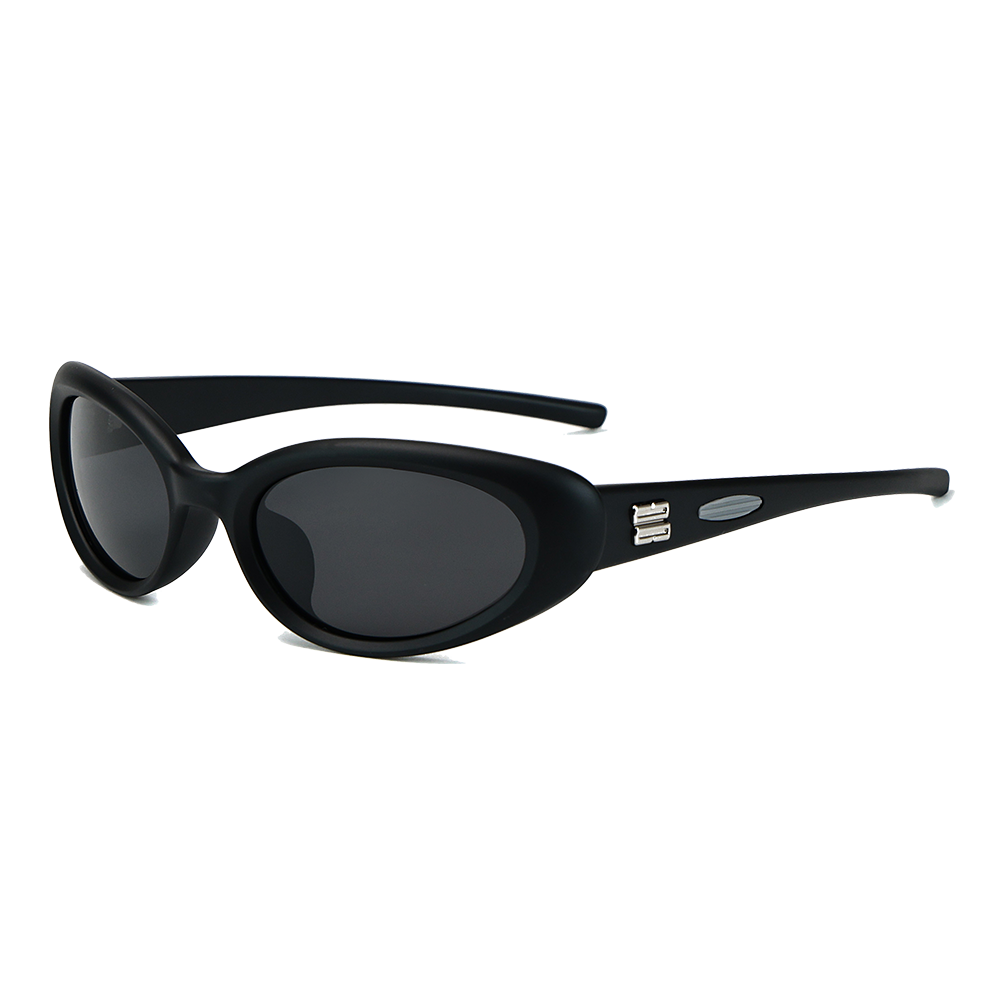
Black Thin Cat Eye Sunglasses combine a narrow frame appearance with a distinctive lens shape. The thin structure can create a lightweight visual impression, while the cat eye outline changes the way the lens covers the area around the eyes. Those design features make lens coverage worth considering alongside appearance.
UV protection is related to the lens itself rather than the darkness of its color. A black or gray lens may reduce visible brightness while providing limited protection from ultraviolet radiation if the lens is not designed for that purpose. Conversely, a relatively light‑colored lens may incorporate suitable UV protection.
Several factors influence practical protection:
- Lens material and its treatment
- Coverage around the eyes
- Frame position on the face
- Light entering from the sides
- Intended environment of use
- Quality and consistency of lens processing
Outdoor exposure also varies throughout the day. Open areas, reflective surfaces, and locations with strong sunlight may create different conditions from shaded streets or indoor spaces near windows. A suitable pair of sunglasses needs to be considered in relation to the environment rather than judged by color alone.
Frame design has a role as well. A narrow frame may leave more space around the lens edges, while a larger lens can cover a broader area. Neither shape automatically determines UV protection, but coverage can affect how much direct and reflected light reaches the area around the eyes.
How Do Dark Lenses Affect Perceived Brightness?
Dark lenses change the amount of visible light reaching the eyes. That change is easy to notice when moving from a clear lens to a dark lens, but visible light and ultraviolet radiation are different parts of sunlight.
A darker appearance can make outdoor surroundings feel more comfortable in bright conditions by reducing perceived brightness. It does not provide enough information to judge UV protection on its own.
Lens color can also influence how the surrounding environment appears. Black and gray tones generally preserve a more neutral visual impression, while colored lenses may alter the appearance of objects and surfaces. For everyday eyewear, the choice depends on the intended visual experience as well as the surrounding light.
| Lens Feature | Main Effect | What It Does Not Indicate |
| Dark Color | Reduces perceived brightness | UV protection level |
| Light Color | Allows more visible light | Lack of UV protection |
| Gray Tone | Supports relatively neutral viewing | Lens coverage |
| Colored Tone | Changes visual appearance | Overall protection by itself |
| Lens Size | Influences covered area | UV filtering capability alone |
What UV Protection Should Sunglass Lenses Provide?
Ultraviolet radiation is not visible to the human eye, which makes it difficult to judge protection through appearance alone. Sunglass lenses designed for outdoor use need to address the ultraviolet portion of sunlight rather than simply reducing visible brightness.
UV protection generally involves filtering ultraviolet radiation before it reaches the eyes. The level of protection should be supported by appropriate lens construction and clearly stated product information.
A practical evaluation can focus on several points:
- UV protection information — Product specifications should clearly state the intended level of UV filtering.
- Lens consistency — Both lenses should provide the intended protective function rather than relying on appearance.
- Coverage — The lens should cover an appropriate area around the eyes for its intended use.
- Optical quality — Clear vision remains relevant even when UV filtering is present.
- Intended environment — Outdoor use under strong sunlight creates different requirements from occasional indoor use.
UV protection should not be confused with glare reduction. Glare concerns the amount and direction of visible light reaching the eyes, while UV filtering concerns radiation that cannot be seen. A lens may reduce glare without providing the expected level of UV protection if its construction is not designed accordingly.
The same principle applies to mirror‑like or tinted surfaces. A reflective appearance can change how a lens looks from the outside, but the appearance itself does not establish its UV filtering capability.
For consumers and eyewear producers, clear product information is useful because visual inspection cannot confirm the full protective characteristics of a lens. Manufacturing consistency also matters. If a lens shape is changed during production, the protective treatment needs to remain compatible with the finished lens.
How Does the Thin Cat Eye Frame Affect Lens Coverage?
The shape of a sunglass frame determines how the lenses sit around the eyes. Cat eye designs typically extend outward toward the upper outer corners, creating a recognizable silhouette. A thin frame places more visual emphasis on the lens shape, which makes the relationship between frame dimensions and eye coverage particularly noticeable.
Coverage is not simply a matter of making the lens larger. The position of the frame on the face, the distance between the lens and the eyes, and the shape of the outer edges all affect how light can approach from different directions.
For a thin cat eye design, attention may be given to:
- The width of the lens near the temples
- The height of the lens around the eyes
- The position of the upper outer corners
- The fit of the bridge area
- The space between the frame and the face
- Light entering around the side edges
Side exposure is worth considering because sunlight does not always arrive directly from the front. Outdoor surroundings may include reflected light from pavement, water, buildings, or other surfaces. A frame that sits close to the face and provides appropriate lens coverage can reduce some of the open space around the eyes.
Frame thickness itself does not determine UV protection. A very thin frame can work with suitable protective lenses, while a thicker frame can still have limited coverage if the lens shape leaves large open areas around the eyes.
The cat eye outline also creates a design balance between visual shape and functional coverage. Excessively narrow lenses may leave more exposed space, while a broader lens can change the appearance of the frame. Product development therefore needs to consider the intended look together with the actual area covered by the lens.
For Black Thin Cat Eye Sunglasses, the black frame and narrow structure establish the visual identity, while lens dimensions and positioning determine much of the practical coverage. Both aspects need to be considered separately when assessing UV protection and everyday outdoor use.
How Should Lens Materials Be Considered for UV Protection?
Lens material affects how a sunglass lens is formed, finished, and integrated with the frame. UV protection is related to the filtering characteristics of the finished lens, so material selection needs to be considered together with the intended protective function.
Lens thickness alone does not indicate the level of UV protection. A thin lens may provide suitable filtering when designed and processed for that purpose, while a thicker lens does not automatically provide the same function.
Optical clarity is another practical consideration. Uneven surfaces, distortion, or processing marks can affect visual comfort even when the lens provides UV filtering. For shaped eyewear, the lens needs to retain its intended form after cutting and fitting.
Surface treatment may also affect daily use. A lens exposed to frequent handling can develop marks that change visual clarity. Appropriate processing and careful handling during assembly help maintain the intended surface condition.
For Black Thin Cat Eye Sunglasses, lens material also needs to work with the relatively narrow frame structure. The lens shape should remain stable after cutting, while the finished edges should fit the frame without creating unnecessary gaps.
What Role Does a Custom Eyewear Manufacturer Play in UV Protection?
A Custom Eyewear Manufacturer may be involved in coordinating the frame, lens shape, material selection, and production requirements. UV protection cannot be added effectively by focusing on one component alone.
Frame dimensions affect the available lens area. Lens shape affects coverage, while the selected lens material influences processing and finishing. These elements need to remain compatible throughout production.
Production checks may include:
- Confirming the intended lens material
- Checking lens shape and edge condition
- Inspecting the fit between lens and frame
- Verifying stated UV protection requirements
- Checking surface clarity after assembly
- Reviewing consistency between paired lenses
Small changes in frame geometry can also affect the finished eyewear. A narrow temple area, angled outer corner, or modified bridge may require corresponding adjustments to the lens shape.
Quality control therefore involves both visual inspection and functional checks. A finished pair should not rely on the dark appearance of the lens as evidence of UV protection. Clear production records and appropriate testing provide a more reliable basis for confirming the intended characteristics.
How Can Black Thin Cat Eye Sunglasses Balance Style and Protection?
A cat eye frame has a recognizable shape, but appearance and protective function do not always point in the same direction. A very narrow lens outline may create a delicate visual effect while leaving additional space around the eyes. A broader lens can provide more coverage but changes the character of the frame.
Black Thin Cat Eye Sunglasses therefore require attention to several connected design details:
- Lens width and height
- Frame position on the face
- Side coverage
- Lens color
- Frame thickness
- Visual relationship with surrounding features
Black frames can be paired with clear, gray, brown, or other lens colors. The frame color does not determine UV filtering, so lens specifications remain the relevant point when protection is being considered.
Daily surroundings also influence the design balance. Commuting through bright outdoor areas creates different conditions from occasional use around shaded buildings. Outdoor activities involving reflective surfaces may require greater attention to lens coverage and light management.
A practical design keeps the visual shape compatible with the amount of lens area required for the intended use. The result does not need to sacrifice appearance for function; rather, frame proportions, lens dimensions, and protective requirements need to be developed together.
What Should Be Checked Before Choosing UV Protected Sunglasses?
Appearance provides a quick way to compare eyewear, but several less visible details deserve attention. UV information, lens coverage, optical clarity, and frame construction all contribute to the suitability of sunglasses for outdoor use.
A useful checklist includes:
- UV information — Confirm that the intended UV protection is clearly stated.
- Lens coverage — Check the area covered around the eyes, including the outer edges.
- Frame fit — Make sure the frame sits in a stable position during normal movement.
- Lens condition — Look for visible scratches, distortion, or uneven areas.
- Frame and lens connection — Check that the lenses sit securely within the frame.
- Intended environment — Match the eyewear with the expected outdoor lighting conditions.
A dark lens should not be treated as proof of UV protection. Likewise, a thin frame does not automatically mean that coverage is inadequate. The actual lens specifications and finished construction provide more useful information.
For products supplied through a Custom Eyewear Manufacturer, production requirements can also be reviewed before final selection. Lens material, frame geometry, surface condition, and UV protection specifications need to remain consistent with the intended design.
The combination of a black cat eye shape and a thin frame is primarily a design choice, while UV protection comes from the lens and its processing. Keeping those functions separate makes it easier to assess sunglasses based on both appearance and practical outdoor use.

Customized For Your Business
Combining fine craftsmanship with automation technology, we create glasses that are competitive in the market.
Quick Links
Information
Contact Us
-
 No. 7-1, Dengtou Industrial Zone, Duqiao Town, Linhai City, Taizhou City, Zhejiang Province
-
 +86-13666884088
-
 +86-13666884088
-
 +86-573-85505155
-
 [email protected]
Copyright © Zhejiang Zhansheng Glasses Co., Ltd.Rights Reserved.
OEM Eyeglass & Glasses Manufacturer
