
 Español
 русский
 عربى
عربىIndustry News
Home / News / Industry News / Could Metal Polarized Sunglasses Be the Right Fit for Your Next Collection

Planning a new sunglasses collection often starts with a simple question: what kind of eyewear will fit the style, needs, and buying habits of the target market? Metal frames paired with polarized lenses offer one possible direction, combining a recognizable frame material with a lens feature suited to bright outdoor environments.
For brands, retailers, wholesalers, and private label buyers, the decision is not simply about choosing a fashionable frame. A collection needs a clear design direction, practical lens options, suitable shapes, and a product structure that can work across different customer groups. This is where metal polarized sunglasses can become an interesting option to consider.
Metal frames have a visual character that can work across several eyewear styles. Depending on the construction and finish, they can create a clean, refined appearance or support a more distinctive fashion direction.
For collection planning, this flexibility can be useful. A buyer does not necessarily need to build an entire range around one frame shape. Different lens silhouettes and bridge designs can create variations while maintaining a consistent metal-frame theme.
Frame shape has a noticeable effect on how a sunglasses collection looks as a whole. Aviator styles can create a familiar aviation-inspired appearance, while round and oval lenses can give a softer visual impression. Square and geometric shapes can introduce more defined lines.
This allows buyers to organize a collection around several design groups rather than relying on a single silhouette.
| Frame Direction | Visual Character | Possible Collection Role |
|---|---|---|
| Aviator | Classic and recognizable | Useful for timeless-inspired collections |
| Round | Soft and casual | Suitable for relaxed fashion concepts |
| Square | Structured and defined | Can support contemporary collections |
| Oval | Smooth and understated | Useful for softer styling directions |
| Geometric | Distinctive and angular | Can add visual variety to a collection |
The frame may attract attention first, but the lens also plays an important role in how the product is positioned. Polarized lenses are designed to filter certain reflected light, making them relevant to outdoor environments where glare can come from roads, water, vehicles, glass, and other surfaces.
That makes polarized eyewear suitable for collection concepts connected with driving, travel, outdoor leisure, and everyday daytime use.
For buyers, this creates an opportunity to connect visual design with a practical product feature. Instead of presenting sunglasses only as a fashion accessory, the collection can also communicate an outdoor-use purpose.
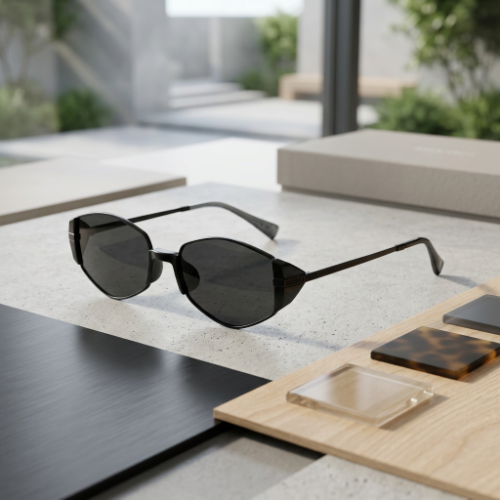
One reason buyers consider versatile eyewear designs is the need to serve different customer preferences. A sunglasses collection may need products for casual shoppers, outdoor users, fashion-focused customers, or retailers looking for a balanced assortment.
Metal polarized sunglasses can be adapted to these different directions through frame shape, finish, lens color, bridge design, and overall styling.
A common mistake in collection planning is looking at the frame and lens as separate elements. They need to work together visually.
A thin metal frame paired with a subtle lens color can create a different impression from a stronger frame combined with a darker lens. Similarly, a geometric frame may call for a different lens treatment than a classic aviator design.
When developing several models, buyers can create consistency by choosing a small group of design principles. For example, a collection might use related metal finishes while introducing different lens shapes. Another approach is to maintain a common frame language while varying lens colors.
This kind of product planning can make a collection feel connected without making every model look identical.
Sampling is an important stage because product images and design drawings cannot show every detail of a finished pair. Physical samples allow buyers to review the relationship between the frame, lens, bridge, temples, finish, and overall appearance.
Before moving forward, buyers can review several practical areas:
These checks are especially useful when several styles are being developed at the same time. Small differences between samples can become more noticeable when products are displayed together.
A new eyewear collection does not need to rely on a single design idea. Buyers often need a range of shapes and visual details to create options for different customers.
Metal polarized sunglasses can provide a useful base for this approach because the same general product direction can be developed through different silhouettes.
| Collection Element | Possible Variation | What It Can Change |
|---|---|---|
| Frame Shape | Aviator, round, square, oval, geometric | Overall style and visual character |
| Lens Color | Different neutral or colored options | Appearance and collection mood |
| Metal Finish | Different surface treatments | Frame presentation |
| Bridge Design | Single or double bridge structures | Front-frame character |
| Frame Proportion | Different widths and silhouettes | Fit and visual balance |
The goal is not simply to add more models. A well-planned range should have enough variation to create choice while maintaining a recognizable design direction.
For buyers working on OEM or private label projects, communication with the manufacturer can influence how efficiently an idea moves from concept to sample.
A manufacturer can help buyers discuss frame structures, available design directions, lens options, finishing choices, and sample development requirements. Clear communication at this stage can reduce misunderstandings before production planning begins.
For example, a buyer may have a general idea based on an aviator frame but want a different bridge, lens color, or metal finish. Discussing these details during development gives both sides a clearer understanding of the intended product.
At Kaizi Glasses, metal eyewear development can be discussed from a product and manufacturing perspective, helping buyers explore different design directions for their collections.
There is no single frame style that works for every market. The right direction depends on the intended customer, collection theme, price positioning, application, and overall design strategy.
Metal polarized sunglasses are worth considering when a collection needs a combination of metal-frame styling and the practical function associated with polarized lenses. The category can cover several visual directions, from familiar aviator silhouettes to round, square, oval, and geometric designs.
For buyers, the next step is to look beyond the product name. Consider how the frame shape works with the lens, how different models fit together as a collection, and whether the design makes sense for the customers you want to reach.
Building a sunglasses collection is a process of balancing design, function, market preferences, and production considerations. Metal polarized sunglasses provide one possible route for buyers looking to combine a recognizable metal-frame appearance with polarized lens functionality.
The value of the category comes from its flexibility. Different frame shapes, finishes, bridge structures, and lens treatments can create distinct products while keeping a common collection direction.
For brands and buyers preparing a new range, careful sampling and clear communication with a manufacturer can help turn a general design idea into a more defined product collection. The key is to consider the complete eyewear design rather than judging the frame or lens as an isolated feature.

Combining fine craftsmanship with automation technology, we create glasses that are competitive in the market.
 No. 7-1, Dengtou Industrial Zone, Duqiao Town, Linhai City, Taizhou City, Zhejiang Province
 +86-13666884088
 +86-13666884088
 +86-573-85505155
 [email protected]
Copyright © Zhejiang Zhansheng Glasses Co., Ltd.Rights Reserved.
OEM Eyeglass & Glasses Manufacturer
