
 Español
 русский
 عربى
عربىIndustry News

What Are Women's Sunglasses Small Frame And Who Should Wear
Author: Admin
Date: Aug 14,2026
Small-frame sunglasses are designed around a more compact relationship between lens width, frame width, bridge position, and facial proportions. Size alone does not define a small frame, since a narrow lens combined with a wide bridge or long temple can still create an awkward fit.
For many wearers, frame proportion becomes noticeable during ordinary use. A frame may slide down during movement, extend well beyond the sides of the face, touch the cheeks, or sit too low around the eyes. Such signs can suggest that frame dimensions do not match facial proportions.
Women's Sunglasses Small Frame are often considered by people with narrower or more petite facial structures, although facial size is not the only reason to choose a compact frame. Some wearers simply prefer a lighter visual appearance around the eyes, while others may want a smaller silhouette that does not cover much of the face.
Several parts work together when assessing size:
- Frame width across the face
- Lens height
- Bridge position
- Temple length
- Frame thickness
- Distance between the eyes and lenses
A frame that looks small in a product image may feel different when worn because facial width and eye position vary from person to person. Practical fitting therefore matters more than relying on a style label alone.
Why Does Frame Proportion Matter for Women With Smaller Faces
Facial proportion affects how sunglasses sit and how much of the face they cover. A frame that extends far beyond a narrow face can create a visually heavy appearance, while a frame with a more controlled width may leave a clearer relationship between the eyes, cheeks, and temples.
Frame width is only one part of that relationship. Lens height can also change how much of a face is covered. A tall lens may appear larger even when overall width seems suitable, while a shallow lens can create a more compact impression.
Bridge placement has a practical role as well. When a bridge does not sit comfortably, sunglasses may move during walking or conversation. A frame that rests too low can also bring lens edges closer to the cheeks.
Visual balance can be considered through several simple questions:
- Does frame width stay close to facial width?
- Do lenses remain comfortably positioned in front of the eyes?
- Does the frame remain stable during movement?
- Are cheeks free from unwanted contact?
- Does frame thickness suit facial features?
No fixed shape needs to be assigned to a particular face size. A smaller face can work with angular, rounded, or cat-eye silhouettes when proportions are handled carefully.
How Can Someone Tell Whether a Sunglasses Frame Is Too Large
A mirror can provide useful information during fitting, although movement offers another important test. Sunglasses that look balanced while sitting still may shift when a person turns the head, bends down, or walks.
Frame width can be checked around both temples. Excessive extension beyond the face may suggest that a frame is too broad. Pressure around the sides can indicate a different fit issue, especially when temple arms remain tight rather than resting naturally.
Lens position deserves attention too. Eyes should sit comfortably within lens openings rather than appearing unusually close to one side. A frame that sits too low may touch the cheeks, particularly when smiling.
Small fit checks can include:
- Move the head from side to side.
- Look down briefly and check whether the frame slides.
- Smile and observe whether lenses touch the cheeks.
- Check whether temple arms create uncomfortable pressure.
- Look at eye position through each lens.
Existing eyewear can also provide a useful reference. A pair that already feels comfortable may help identify a suitable range of frame width and lens placement.
Comfort should not be judged from appearance alone. A visually attractive shape can still feel unstable when dimensions do not match facial structure.
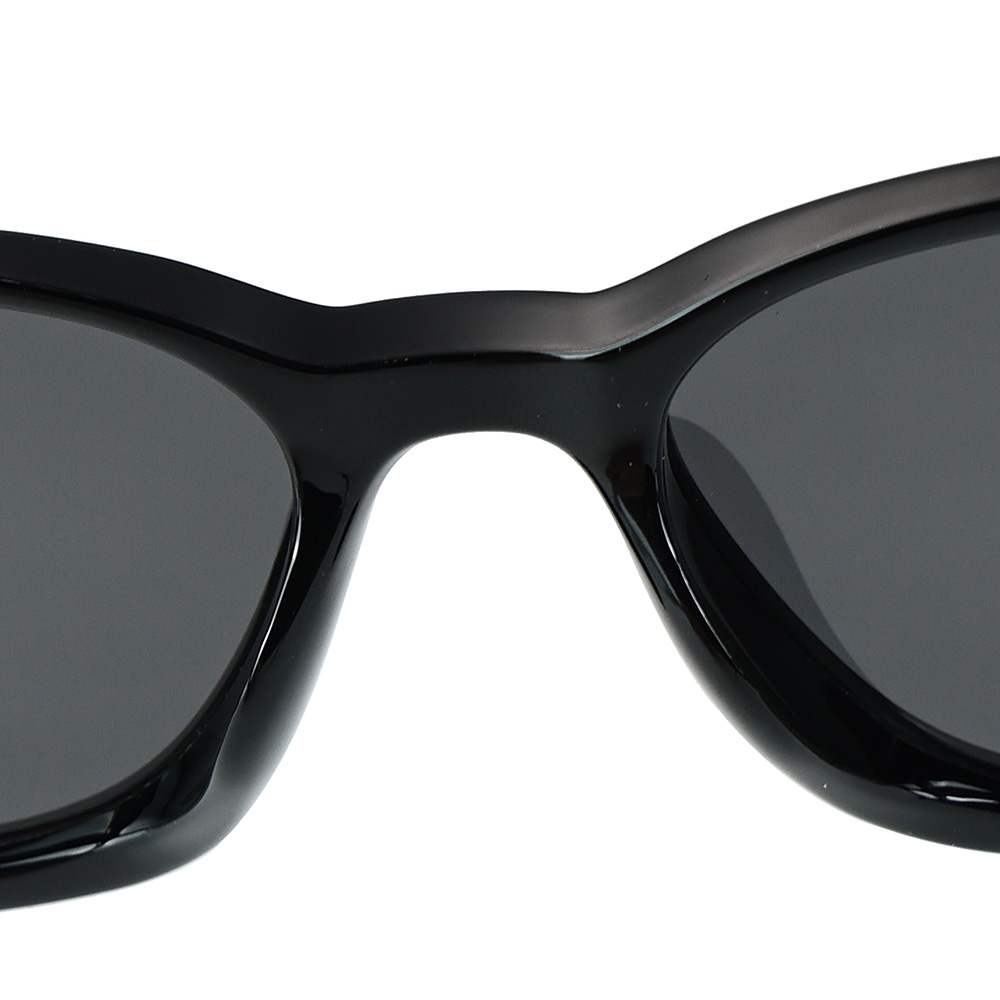
Which Face Shapes Can Wear Small Frame Sunglasses
Face shape can provide a starting point for choosing a silhouette, although it should not become a strict rule. Facial features rarely fit perfectly into one category, and frame proportion can change how a shape appears.
Oval faces generally have a relatively balanced relationship between forehead, cheeks, and chin. Smaller frames can preserve that balance without covering too much of the face.
Round faces often have softer curves around the cheeks and jaw. Angular frames can introduce a more structured visual line, while a compact shape can prevent excessive width from covering facial features.
Square faces usually contain stronger lines around the forehead, cheeks, and jaw. Rounded or softly curved frames may create a gentler contrast, while compact angular designs can maintain a more defined appearance.
Heart-shaped faces can have a wider upper area with a narrower chin. A smaller frame with controlled width may keep attention around the eyes without extending too far toward the temples.
Diamond-shaped faces often have noticeable cheek width with narrower forehead and jaw areas. Curved corners or moderate frame width can work with those proportions, depending on individual features.
| Face Shape | Frame Consideration | Possible Visual Effect |
|---|---|---|
| Oval | Compact balanced shapes | Maintains facial proportion |
| Round | Angular compact shapes | Adds visual structure |
| Square | Softer corners | Creates contrast with strong lines |
| Heart | Controlled width | Keeps upper-face proportions balanced |
| Diamond | Curved or moderate shapes | Works with cheek emphasis |
Face shape offers only a general guide. Actual frame width, lens position, bridge fit, and personal preference remain important during selection.
How Do Cat Eye Frames Work on Smaller Faces
Cat-eye frames are recognized by an upward movement toward outer corners, creating a shape that draws attention toward the sides of the eyes. A compact version can add definition without requiring a very wide frame.
Outer corner height can change the overall impression considerably. A gentle upward angle tends to create a subtle effect, while a pronounced corner can make a frame feel more expressive.
Frame thickness also matters. A narrow structure can keep a cat-eye silhouette visually light, while a thick frame may occupy more space around the eyes. Lens height contributes to that effect as well, especially on a smaller face.
For compact facial proportions, a cat-eye frame can be considered through three areas:
- Width: should remain comfortable around the temples
- Corner shape: should follow the desired visual direction
- Lens height: should avoid covering an excessive portion of the face
A cat-eye design does not automatically need to be narrow. Shape and physical dimensions are separate considerations, which is why trying on different proportions can produce very different results even when frames share a similar silhouette.
Can Large Square Cat Eye Sunglasses Work for Smaller Faces
A large visual shape does not always mean a physically oversized frame. Large Square Cat Eye Sunglasses can combine broad square lines with lifted outer corners, creating a stronger visual presence around the eyes.
For a smaller face, physical width becomes particularly important. A frame can retain square and cat-eye characteristics while using controlled dimensions that remain within a comfortable facial range.
Lens height should receive equal attention. A frame with substantial height can cover a larger portion of the upper cheeks, which may change the balance of a petite face. Frame thickness can add another layer of visual weight.
Rather than judging a style by its name, several practical points can be checked:
- Does frame width extend too far beyond the temples?
- Do outer corners remain comfortable during movement?
- Does lens height leave enough facial space around the cheeks?
- Does frame thickness overwhelm smaller facial features?
- Does bridge placement keep the lenses stable?
A square cat-eye shape can therefore work across different facial proportions when physical dimensions are considered carefully. Style and fit need to be evaluated together rather than treated as separate choices.
How Should Frame Size and Lens Shape Be Considered Together
Frame size cannot be judged from width alone. Lens height, bridge placement, temple length, and frame thickness can change how sunglasses sit and how much space they occupy around the eyes.
A narrow frame with tall lenses may still look substantial on a petite face. A wider frame with shallow lenses can create a different visual effect, even when both frames have a similar overall width. For that reason, looking at only one measurement may help to an incomplete fitting decision.
Eye position also matters. Lenses should sit naturally in front of the eyes rather than forcing the wearer to look through an unusual part of the lens. Bridge placement can influence that position, while temple length affects how securely the frame rests around the head.
For smaller facial proportions, a useful check can include:
- Compare frame width with facial width
- Check whether lens height leaves reasonable space around the cheeks
- Look at eye position through each lens
- Check whether the bridge stays stable
- Move the head to see whether the frame shifts
- Consider frame thickness along with shape
Visual weight deserves attention as well. A thin frame and a thick frame can have very different effects even when their dimensions are similar. A strong square shape may appear heavier when combined with thick edges, while a lighter construction can soften the same basic outline.
Who May Benefit From Women’s Sunglasses Small Frame
Compact sunglasses can be useful for women with narrower facial proportions, especially when standard frames tend to slide, extend too far toward the sides, or touch the cheeks.
Petite facial structure is not the only reason to choose a smaller frame. Some people prefer a less covering shape because it leaves more of the face visible. Others may want sunglasses that sit closer to the eyes without creating excessive width around the temples.
A practical fit can be more important than a face-shape category. Someone with a relatively broad face may still prefer a compact frame for a particular visual style, while a person with a narrow face may prefer a slightly larger silhouette.
Common situations worth checking include:
- Frequent frame movement
A frame that repeatedly slides down may have unsuitable dimensions or bridge placement. - Excessive side width
A frame extending far beyond the temples can change the intended visual proportion. - Cheek contact
Lenses or lower frame edges touching the cheeks during smiling may indicate that lens height or frame position needs attention. - Pressure around the temples
A frame that feels tight can create discomfort even when its overall width looks suitable.
Comfort during normal movement provides useful information. Walking, looking down, turning the head, and smiling can reveal fitting problems that remain hidden when sunglasses are only checked while sitting still.
What Common Fit Problems Should Be Checked
Small-frame selection can still produce fitting problems when attention is placed only on appearance. A compact frame may have suitable width while its bridge sits poorly, or a visually attractive cat-eye may have excessive lens height.
Several issues are worth checking before making a choice:
- Frame extends too far: side width may be larger than facial proportions require.
- Lenses sit too low: bridge placement may not provide stable positioning.
- Cheek contact occurs: lens height or frame position may need adjustment.
- Temple pressure appears: the frame may be too narrow or the temple shape may not suit the wearer.
- Frame feels visually heavy: thickness and shape may occupy too much facial space.
A mirror can help with visual assessment, while movement provides information about stability. Combining both approaches gives a more realistic picture of fit.
How Do Different Frame Shapes Change the Overall Appearance
Frame shape changes the visual direction of sunglasses even when size remains similar. Square designs introduce clearer horizontal and vertical lines, while rounded frames create softer curves.
Cat-eye silhouettes draw attention toward the outer corners. A compact cat-eye can therefore create definition around the eyes without requiring a very wide frame. Square elements can add structure, creating a different effect from a fully rounded design.
Oval and rounded shapes may work well when softer lines are preferred. Rectangular designs can create a more defined appearance around the eyes, while curved edges can reduce the visual sharpness of angular features.
Shape should be considered together with facial features rather than assigned according to strict categories. Face shape, cheek width, brow line, eye position, and personal preference all contribute to the final appearance.
How Can Women Choose a Small Frame Without Following a Fixed Rule
Choosing a compact frame can begin with a familiar pair of sunglasses that already feels comfortable. Frame width, bridge position, lens height, and temple length can provide useful points of comparison.
Next, consider where the sunglasses will normally be worn. Outdoor light, daily commuting, driving, walking, and casual use can involve different viewing angles and movement patterns.
A simple fitting sequence can help:
- Check frame width around the temples.
- Look at eye position through each lens.
- Check whether the lower edge touches the cheeks.
- Move the head and observe frame stability.
- Compare frame thickness with facial features.
- Consider whether the shape matches the desired visual effect.
Women's Sunglasses Small Frame should not be treated as a category that belongs to one specific face type. Compact proportions can serve practical fitting needs, while shape selection allows room for personal styling.
Large Square Cat Eye Sunglasses can also be considered when a stronger shape is preferred, provided physical dimensions remain comfortable. A larger visual silhouette does not necessarily require an excessively wide fit.
How Is Small Frame Selection Becoming More About Fit and Proportion
Small-frame eyewear is increasingly discussed through fit, proportion, and everyday use rather than shape alone. A frame can look appealing in isolation while feeling uncomfortable during movement, so physical dimensions remain important alongside visual design.
For women with smaller facial proportions, a compact frame may reduce problems such as excessive side width, slipping, or cheek contact. For others, smaller dimensions may simply create the desired visual balance.
Cat-eye, square, rounded, and rectangular designs can all appear in compact proportions. Women's Sunglasses Small Frame therefore describes more than one fixed style, while Large Square Cat Eye Sunglasses shows how a stronger silhouette can still be considered through careful attention to width, lens height, bridge position, and frame weight.
A practical choice comes from looking at the complete relationship between face, frame, lenses, and everyday movement. Shape creates the visual character, while proportion determines how naturally that character fits the wearer.

Customized For Your Business
Combining fine craftsmanship with automation technology, we create glasses that are competitive in the market.
Quick Links
Information
Contact Us
-
 No. 7-1, Dengtou Industrial Zone, Duqiao Town, Linhai City, Taizhou City, Zhejiang Province
-
 +86-13666884088
-
 +86-13666884088
-
 +86-573-85505155
-
 [email protected]
Copyright © Zhejiang Zhansheng Glasses Co., Ltd.Rights Reserved.
OEM Eyeglass & Glasses Manufacturer
