
 Español
 русский
 عربى
عربىIndustry News
Home / News / Industry News / How Does Frame Thickness Affect the Look of Black Thin Cat Eye Sunglasses

Frame thickness can quietly change the appearance of a pair of sunglasses. A cat eye shape may remain the same, while a thinner or heavier frame gives the face a different visual balance. With black frames, the difference can become easier to notice because dark edges create a clear boundary around the eyes.
For Black Thin Cat Eye Sunglasses, frame thickness is closely related to how much visual weight sits around the eyes. A fine frame can leave more attention on the lenses and the shape of the face, while a heavier frame can make the outline feel more pronounced. Lens size, frame width, and the upward sweep at the outer corners also need to work together.
Frame thickness affects how much space the sunglasses appear to occupy on the face. A slim edge usually creates a lighter visual boundary around the lenses. More of the lens surface remains noticeable, so the overall shape can appear clean without placing too much emphasis on the frame itself.
A thicker edge changes that balance. More of the frame becomes visible, giving the sunglasses a stronger outline around the eyes. Even with the same lens shape, the finished appearance can feel quite different.
Cat eye sunglasses already have a noticeable outer lift. Adding more frame thickness can make that upward direction easier to see. A thin edge takes a quieter approach, allowing the cat eye curve to remain visible without making the frame appear heavy.
Such differences are easier to see when comparing two frames with similar width and lens shape. Rather than looking at the frame from a distance, placing both styles against a face gives a more useful impression.
Several visual points can change together:
A thin frame does not necessarily make a pair look small. Lens size and overall frame width still determine how much space the sunglasses occupy. Frame thickness mainly changes how that space is visually divided.
A cat eye design usually has an outer corner that rises away from the center of the face. That small change in direction is one of the main features that separates the shape from a simple rounded or straight frame.
With a thin frame, the upward corner can appear relatively precise. Less material surrounds the lens, so the eye naturally follows the outline from the bridge toward the raised outer edge. For a black frame, that narrow dark line can define the shape without covering much of the surrounding area.
A thicker frame gives the same corner more visual mass. The outer edge may appear stronger, especially when the frame rises sharply toward the temples. Such a look can suit someone who wants the cat eye outline to play a larger role in the overall appearance.
Frame thickness also interacts with the top edge. A fine upper line can make a curved cat eye shape feel more open, while a heavier upper section may make the eye area appear more enclosed.
Looking only at the outer corner can therefore be misleading. A balanced cat eye frame needs the bridge, upper edge, lower edge, and outer corner to work as one shape.
For practical comparison, look at:
A thin frame can make small changes in the cat eye curve easier to notice. A heavier edge can soften some of those differences because more visual attention goes toward the frame itself.
Black already creates a strong outline, so frame thickness has an important role in controlling how that outline appears. A narrow black edge can define the eyes without taking up much visual space around them.
For Black Thin Cat Eye Sunglasses, that combination can create a clear shape while leaving more of the face visible around the frame. Hair, eyebrows, skin tone, and facial contours remain part of the overall appearance rather than being visually surrounded by a heavy border.
Changing only the thickness can produce a noticeable difference. A slightly heavier black frame may draw more attention toward the eye area, while a slimmer edge can make the same cat eye design feel more restrained.
Color also matters when judging thickness. A light-colored frame and a black frame with the same physical width may not create the same visual effect. Dark edges tend to be easier to distinguish against many skin and background tones, making small changes in frame width more apparent.
For that reason, comparing a black frame on a display surface is not enough. Trying it against the face provides more useful information because the surrounding features become part of the visual balance.
A few questions can help:
A slim black frame can give a cat eye design a defined outline without requiring a large amount of material around the lenses. That balance is one reason frame thickness deserves attention during selection.
Lens proportion changes when frame thickness changes, even when the outside dimensions remain similar. A thicker frame occupies more of the visible area around the lens, making the lens itself appear slightly less dominant.
With a thin frame, more of the lens surface remains visually exposed. For cat eye sunglasses, that can make the upward shape of the lens easier to notice because less surrounding material competes with its outline.
Imagine two pairs with similar outer dimensions. One has a narrow black border, while another has a wider border. Looking through both may feel different because the second pair gives more space to the frame and less visual attention to the lens.
Lens proportion should also be considered from the front rather than judged only by frame width. A wide lens with a fine edge can look relatively open, while a smaller lens surrounded by a heavy frame may feel more compact.
A useful comparison can include:
| Feature | Thin Frame | Thicker Frame |
| Lens Visibility | More of the lens area remains visually open | Frame occupies more visual space |
| Frame Weight | Lighter visual boundary | Stronger visual boundary |
| Cat Eye Edge | Outer curve can appear clear and fine | Outer curve can appear more pronounced |
| Eye Area | More open appearance | More framed appearance |
| Overall Balance | Face and lens share attention | Frame receives more visual attention |
Lens size still matters, so frame thickness should not be considered alone. A fine frame around a very wide lens can create a different impression from a fine frame around a compact lens.
For Black Thin Cat Eye Sunglasses, the relationship between black frame width and lens area can be especially noticeable. A narrow border can preserve the cat eye outline while allowing the lens shape to remain an important part of the finished look.
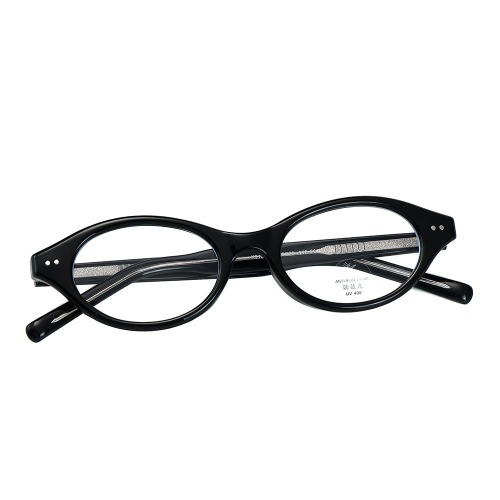
Frame thickness becomes easier to understand when it is viewed together with facial proportion. Face width, cheek shape, forehead size, and eye position can all change how a pair of sunglasses appears.
A thin black frame usually leaves more of the surrounding face visible. On a narrower face, such an outline may create a lighter transition around the eyes. A thicker frame places more visual weight around the same area, making the sunglasses easier to notice.
Wider facial proportions can create a different result. A fine frame may appear relatively quiet, while a heavier outline can give the sunglasses a clearer presence. Rounded facial contours also interact with the upward shape of a cat eye frame. A thin edge can keep that contrast gentle, while a thicker edge makes the outer corners more defined.
Longer facial proportions bring another point into consideration. Lens height, frame width, and thickness need to share the available visual space. A large lens combined with a heavy upper edge can create a more enclosed appearance, while a slim edge can leave more space around the eyes.
Several points are useful when comparing different frames:
Face shape alone does not determine whether a frame looks balanced. Overall proportion provides a more practical reference.
Frame thickness is easy to notice along the outer edge, while the bridge often receives less attention. Since the bridge connects both lenses, its width and thickness can affect how the entire front outline feels.
A slim bridge can keep a thin frame visually light from one side to the other. A heavier bridge gives more definition to the center of the sunglasses, especially when the outer rims are also relatively thick.
For black cat eye sunglasses, the bridge can change how much visual space appears between the eyes. A narrow connection leaves more open space, while a heavier connection gives the center section greater presence.
The transition between bridge and upper rim also matters. A sudden difference in thickness can make one part of the frame appear heavier. A more coordinated transition creates a smoother visual flow.
Useful details include:
A frame does not need identical thickness across every section. Small changes can form part of the design, provided the overall outline remains visually coordinated.
Sunglasses naturally add visual weight around the upper face. A cat eye shape adds another element through its raised outer corners, making frame thickness more noticeable around the eye area.
A thin edge leaves more facial space visible. Eyebrows, cheeks, and surrounding contours remain visually connected with the frame rather than being surrounded by a heavy outline. A black frame can still provide a clear shape while keeping the overall border relatively light.
A thicker edge shifts more attention toward the sunglasses. Upper rims and outer corners become stronger visual elements, which can change how the glasses relate to the forehead and cheeks.
Hair and eyebrow shape can also influence the result. Strong lines around the upper face combined with a heavy black frame may create a denser visual area. A fine frame can create a softer transition between those features and the sunglasses.
Lens height should also be considered. A large lens with a thick upper rim occupies more visual space than a similar lens with a narrow edge. Looking at the complete face therefore gives a clearer impression than judging frame thickness alone.
"Thin"does not describe one fixed style. A narrow black frame can have a gentle curve, a sharper outer corner, a rounded lower edge, or a straighter upper line. Each detail affects the final appearance.
A fine frame with a soft cat eye curve may create a restrained visual effect. A similar frame with a sharper outer corner places more attention on the lifted shape. Lens size can change the appearance again without changing the frame thickness.
Black also makes the frame outline easy to distinguish. A narrow black edge can define the cat eye shape while leaving more attention on the lens and facial features. A heavier black edge gives greater visual weight to the frame itself.
Several design details should therefore be considered together:
Calling a frame "thin"only describes one part of its construction. The complete outline determines how that thin frame actually appears on the face.
A direct comparison is more useful than judging frame thickness from a product image alone. Frames with similar lens shapes can be placed side by side, making differences in the black outline easier to see.
Start with the overall width. A thin frame can still have a noticeable presence when it extends widely across the face. Next, examine the outer corners and check how clearly the cat eye curve appears.
Lens area is another useful reference. A narrow border leaves more of the lens shape visually exposed, while a thicker border gives the frame a larger share of attention.
The bridge should then be checked together with the outer edges. A very light center combined with heavy corners may create a different balance from a frame with more even thickness.
| Comparison Point | Thin Frame | Thicker Frame |
| Visual Weight | Light outline | More defined outline |
| Lens Area | More visually open | More frame around the lens |
| Cat Eye Corners | Fine and clear | Stronger presence |
| Black Border | Narrow | More noticeable |
| Eye Area | Relatively open | More framed |
| Bridge | Lighter center effect | More defined center |
For Black Thin Cat Eye Sunglasses, frame thickness works together with lens size, cat eye angle, bridge shape, frame width, and facial proportion. Looking at all of these elements together gives a clearer understanding of how a pair will appear than relying on the word "thin"alone.

Combining fine craftsmanship with automation technology, we create glasses that are competitive in the market.
 No. 7-1, Dengtou Industrial Zone, Duqiao Town, Linhai City, Taizhou City, Zhejiang Province
 +86-13666884088
 +86-13666884088
 +86-573-85505155
 [email protected]
Copyright © Zhejiang Zhansheng Glasses Co., Ltd.Rights Reserved.
OEM Eyeglass & Glasses Manufacturer
