
 Español
 русский
 عربى
عربى
The Operational Framework of an Optical Glasses Manufacturer
Core Competency: Precision Lens Production
An optical glasses manufacturer operates at the intersection of material science, precise optics, and ophthalmic engineering. The core competency lies in the production of prescription lenses that accurately correct refractive errors. This process begins with optical-grade raw materials—primarily CR-39 plastic, polycarbonate, or high-index plastics—which are cast into semi-finished lens blanks. For single-vision prescriptions, these blanks are then surfaced in a highly automated process: a generator grinds the back curve to the exact prescription, followed by polishing to optical clarity. For complex progressive or bifocal lenses, advanced freeform surfacing technology is used, where digital design data guides a diamond-tipped cutter to create precise, customized lens geometries. This phase is the technical heart of an optical glasses manufacturer, where tolerances are measured in microns to ensure visual acuity and wearer comfort.
Material Science and Advanced Lens Treatments
Beyond basic correction, a modern optical glasses manufacturer integrates advanced materials and coatings to enhance lens performance and durability. Material selection is critical: polycarbonate and Trivex offer high impact resistance; high-index materials allow for thinner, lighter lenses in strong prescriptions. The manufacturer applies multiple functional coatings in a sequential vacuum deposition process. These include anti-reflective coatings to reduce glare and improve light transmission, scratch-resistant hard coatings, and hydrophobic/oleophobic coatings that repel water, oil, and dust. For photochromic lenses, the manufacturer incorporates light-sensitive molecules that darken upon UV exposure. The ability to consistently apply these complex, multi-layer systems defines the quality and value proposition of a sophisticated optical glasses manufacturer.
Frame Design, Engineering, and Assembly
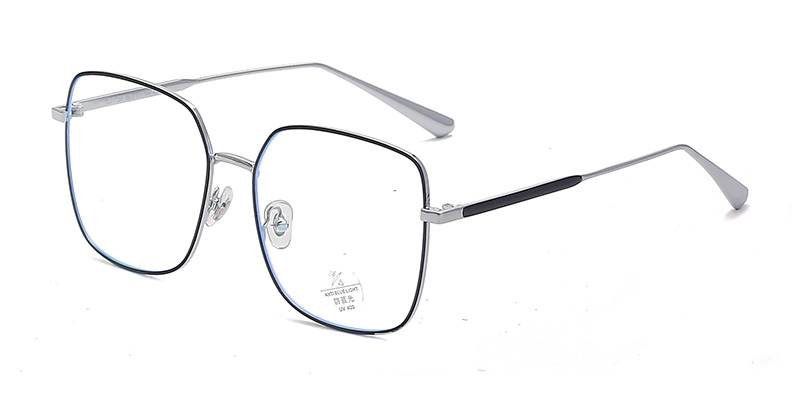
While lenses correct vision, frames define fit, style, and comfort. A full-service optical glasses manufacturer designs and fabricates frames from various materials, including acetate, metal alloys, titanium, and TR90. The process involves design, mold creation, material injection or machining, hinge assembly, and finishing (polishing, plating, or painting). The critical final step is the precise assembly and mounting of the finished lenses into the frame. This requires skilled technicians and precise equipment to edge the lenses to the exact shape of the frame's rim, ensure proper optical alignment, and secure them without stress, which could distort the prescription. This seamless integration of lens and frame is a hallmark of a vertically integrated optical glasses manufacturer.
Quality Assurance and Prescription Verification
In an industry where product performance is directly tied to user health and safety, rigorous quality assurance is non-negotiable for an optical glasses manufacturer. Every pair of finished eyeglasses undergoes a multi-point verification process. This includes using a lensometer to confirm the power, axis, and prism of the prescription matches the order exactly. Additional checks verify the optical center alignment, lens mounting stability, and cosmetic quality (freedom from scratches or coating defects). Frames are inspected for hinge tension, symmetry, and material integrity. This meticulous end-of-line validation ensures that every product leaving the facility of an optical glasses manufacturer meets not only the customer's prescription but also stringent standards for optical performance and construction quality.
Supply Chain and Customization in a Modern Market
The business model of a contemporary optical glasses manufacturer is built on agile supply chains and mass customization. It must manage global sourcing for raw polymers, metal alloys, coatings, and frame components. The rise of digital surfacing has enabled true made-to-order production; each lens pair is uniquely manufactured for a specific individual, requiring sophisticated logistics to track orders from the optician's prescription through production to final delivery. Manufacturers serve diverse channels: supplying finished products to retail chains, providing semi-finished lenses and frames to independent labs, and increasingly engaging in direct-to-consumer models. Success hinges on the ability to combine efficient, high-volume processing of standardized elements with the flexibility to produce highly customized, complex prescriptions rapidly and accurately.

Combining fine craftsmanship with automation technology, we create glasses that are competitive in the market.
-
 No. 7-1, Dengtou Industrial Zone, Duqiao Town, Linhai City, Taizhou City, Zhejiang Province
-
 +86-13666884088
-
 +86-13666884088
-
 +86-573-85505155
-
 [email protected]
Copyright © Zhejiang Zhansheng Glasses Co., Ltd.Rights Reserved.
OEM Eyeglass & Glasses Manufacturer
