
 Español
 русский
 عربى
عربى
Inside a Busy Women's Sunglasses Factory
Design Studio Where Trends Begin
Before any frames reach production, designers sketch ideas that will shape fashion seasons. A women's sunglasses factory typically employs creative teams traveling to Milan, Paris, and New York, observing what influencers wear and what runways showcase. They return with sketchbooks filled with ideas translated into technical drawings. Color specialists mix thousands of frame shades, matching Pantone numbers that coordinate with handbag collections and shoe lines hitting stores simultaneously. This creative engine drives everything that happens later on production floors.
Material Selection and Sourcing
Quality starts with raw materials arriving at receiving docks. Acetate sheets in marble patterns, metallic finishes, and translucent colors stack in climate-controlled storage. Stainless steel hinge components arrive from precision manufacturers in sealed boxes. Screws too small to handle easily come counted in bags of thousands. Every women's sunglasses factory maintains relationships with trusted suppliers who deliver consistent materials meeting strict specifications. Rejecting substandard shipments protects production schedules from unexpected delays.
Frame Manufacturing Processes
Acetate frames begin as flat sheets cut into rough shapes by automated machines. Skilled workers heat these pieces until flexible, then bend them around heated mandrels, forming initial curves. After cooling, frames move to milling stations where CNC routers carve precise grooves for lens insertion. Hand filing removes any rough edges before polishing wheels create smooth, comfortable surfaces. A women's sunglasses factory producing acetate frames balances automation with hand craftsmanship for results.
Metal Frame Construction
For metal styles, production follows different paths. Thin wire sections feed into bending machines, forming front pieces and temple arms. Welding stations join components with precise heat application invisible to the naked eye. Electroplating tanks apply thin metal layers in gold, rose gold, or silver tones. Workers inspect each joint, ensuring hinges open smoothly and frames maintain symmetry. Quality control at every women's sunglasses factory station prevents assembly problems discovered too late.
Lens Cutting and Edging
Prescription and non-prescription lenses arrive as semi-finished blanks requiring final shaping. Computer-controlled edgers trace frame contours, grinding lens edges to a fit. Workers insert lenses carefully, checking for stress patterns indicating improper seating. Some styles receive mirror coatings in vacuum chambers where vaporized metal bonds to lens surfaces. Others get gradient tints dipping slowly into dye baths, creating smooth color transitions. Lens preparation demands precision throughout any women's sunglasses factory operation.
Decorative Element Application
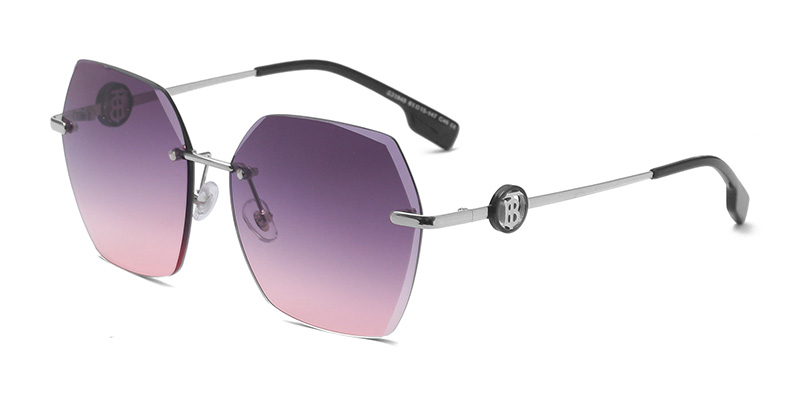
Women's styles often feature decorative touches, distinguishing them from unisex offerings. Swarovski crystal applicators place tiny stones into pre-drilled settings with vacuum tools. Logo printing machines stamp brand names onto temple interiors using solvents bonding permanently to surfaces. Rhinestone patterns get transferred using heat-activated adhesives. These details transform basic frames into fashion statements commanding higher prices from style-conscious consumers visiting boutiques.
Assembly Line Coordination
Frame and lens components converge at assembly stations where workers unite them permanently. Some operations use screw construction requiring steady hands, inserting tiny fasteners without scratching surfaces. Others employ snap-fit designs where lenses press into grooves held by frame tension. Temple attachments receive final hinge screws before finished sunglasses move toward inspection. The organized flow through a women's sunglasses factory assembly area resembles a choreographed dance.
Final Inspection Standards
Every pair undergoes examination before reaching packaging stations. Inspectors hold frames against light tables, checking lens clarity and coating uniformity. They flex temples, testing hinge durability and frame flexibility. They verify symmetry by measuring both sidesand comparing dimensions. Any imperfection triggers rejection, sending sunglasses back for correction or scrap. Stringent inspection protects brand reputation when products reach retail displays worldwide.
Packaging and Presentation
Boxing completes the production journey with careful attention to presentation. Some styles arrive in rigid cases protecting delicate frames during shipping. Others slide into soft pouches fitting easily into handbags. Instruction cards explain lens cleaning and care requirements. Display stands ready for retail placement accompany bulk shipments. A women's sunglasses factory understands that packaging creates impressions, influencing purchase decisions at stores.

Combining fine craftsmanship with automation technology, we create glasses that are competitive in the market.
-
 No. 7-1, Dengtou Industrial Zone, Duqiao Town, Linhai City, Taizhou City, Zhejiang Province
-
 +86-13666884088
-
 +86-13666884088
-
 +86-573-85505155
-
 [email protected]
Copyright © Zhejiang Zhansheng Glasses Co., Ltd.Rights Reserved.
OEM Eyeglass & Glasses Manufacturer
