
 Español
 русский
 عربى
عربىIndustry News

Which Style of Bluelight Glasses Men Suits Different Face Shapes
Author: Admin
Date: May 22,2026
Why Face Shape Matters When Choosing Bluelight Glasses Men
In daily life, many men start paying attention to bluelight glasses when long screen time becomes part of work or study. At that point, the choice is not only about lens function, but also about how the frame looks on the face.
Different faces have different outlines. Some are soft and rounded, some are more angular, and some fall somewhere in between. When a frame is placed on the face, it does more than sit there. It changes how the facial lines are seen by others.
Bluelight Glasses Men are often worn for long hours, so comfort and appearance both matter. A frame that feels fine for a few minutes may feel different after longer use. At the same time, the visual balance between frame and face slowly becomes more noticeable during daily wear.
That is why face shape is not just a style idea. It affects how the glasses sit, how they feel, and how they match everyday appearance.
How Frame Shape Changes the Look of Different Face Types
When looking at Bluelight Glasses Men, frame shape is usually the thing that changes the overall impression. Even a small adjustment in curve or angle can change how the face looks.
Frames with sharp lines tend to make facial features appear more structured. Frames with soft curves create a gentler visual flow. Neither is better or worse. It depends on how the frame interacts with the natural outline of the face.
Some key factors that influence this interaction include:
- Width of the frame compared to face width
- Curvature of the frame edges
- Thickness of the frame structure
- Height of the lens area
- Position of the bridge on the nose
A simple comparison can help show how different frame types interact with facial structure:
| Frame Character | Visual Effect on Face | Common Result |
|---|---|---|
| Angular frame | Adds structure to soft outlines | Stronger facial definition |
| Rounded frame | Softens sharp facial edges | More balanced appearance |
| Thin frame | Light visual presence | Less facial interruption |
| Thick frame | Strong visual focus | Clear frame emphasis |
These differences become more noticeable during long wear.
Which Bluelight Glasses Men Styles Suit Round Face Shapes
Round face shapes usually have softer curves and less defined angles. In this case, the goal is often to create a bit more structure without making the look feel too heavy.
Frames with straight lines or mild angles are often chosen because they help break the softness of the face outline. This creates a more balanced appearance when seen from the front.
In practical use, round face shapes often work well with:
- Frames that have slightly sharper corners
- Medium-width designs that extend beyond cheek line
- Structures that avoid too much circular shaping
- Frames with clear upper line definition
Soft and fully round frames may blend too much with the face shape, making the outline less defined. That is why adding structure through frame design is often preferred.
However, comfort still plays a role. Since Bluelight Glasses Men are often worn for long screen sessions, the frame should not feel tight around the temples or nose area. A balance between structure and comfort is usually needed.
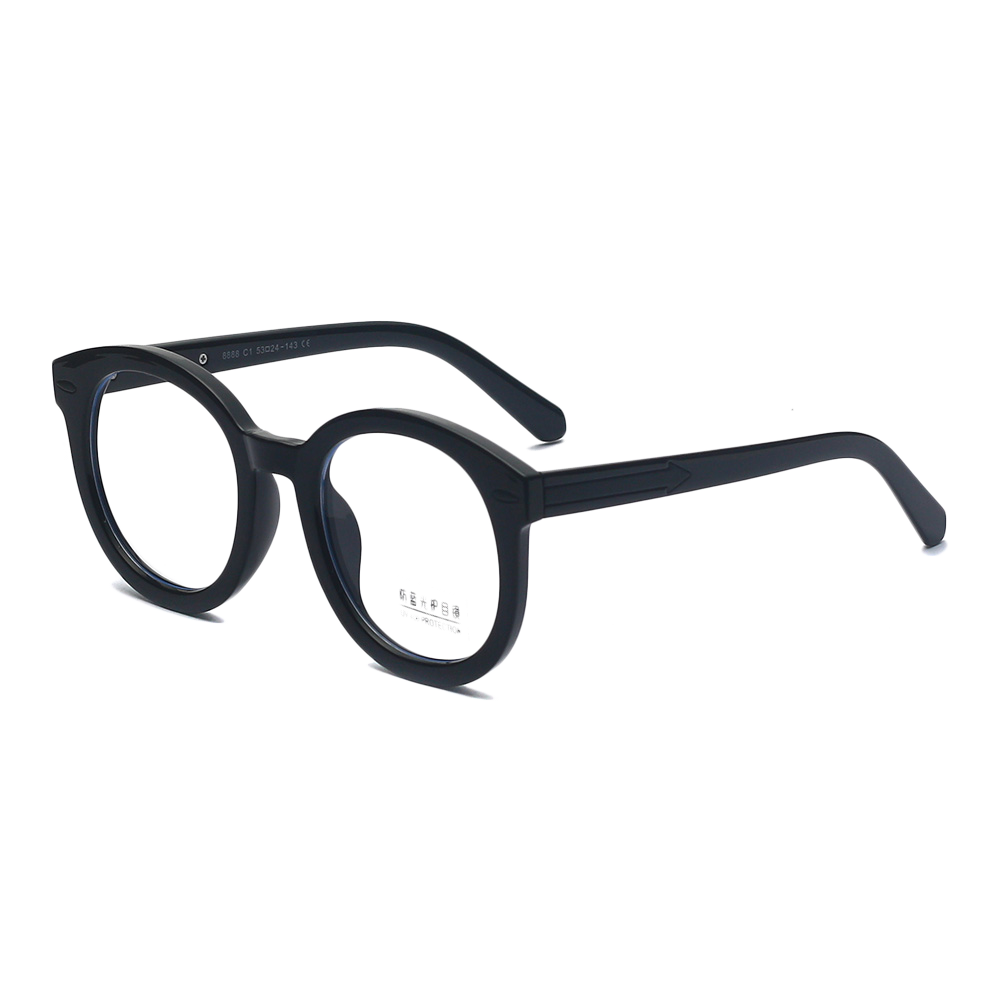
What Frame Styles Work Better for Square Face Shapes
Square face shapes usually have stronger angles around the jawline and forehead. The facial outline already has clear structure, so frame choice often focuses on softening the overall impression.
Frames with rounded edges tend to work more naturally here. Instead of adding more angles, they bring a smoother visual transition across the face.
Common suitable frame traits include:
- Soft curved frame outline
- Slightly rounded lens shape
- Medium thickness without strong sharp corners
- Balanced width that does not exaggerate jawline width
Square face shapes may feel too rigid when combined with very angular frames. A softer frame helps reduce that visual intensity.
In daily wear, especially during long screen time, lighter frame pressure is also important. Since structured faces already have strong visual presence, a lighter frame helps maintain balance during extended use.
How Oval Face Shapes Adapt to Different Bluelight Glasses Men Designs
Oval face shapes are often considered flexible when it comes to frame selection. The proportions are usually balanced, so different frame styles can sit well without strong contrast issues.
However, even with this flexibility, some points still matter in daily use. Oversized frames may slightly overwhelm the natural face proportion, while very small frames may not provide enough visual balance.
Oval face shapes often match well with:
- Thin metal or mixed-material frames
- Medium lens size with balanced width
- Frames that follow natural face proportion
- Simple structure without heavy edges
Because Bluelight Glasses Men are often worn indoors for long hours, comfort becomes more noticeable than visual impact. Lightweight frames tend to feel more stable during extended use, especially when moving between tasks or screens.
Which Frame Features Suit Long Face Shapes in Daily Wear
Long face shapes usually have more vertical length compared to width. In this case, frame selection often aims to create a more balanced horizontal feeling.
Frames that are slightly deeper from top to bottom help reduce the sense of length. Horizontal balance becomes more important than vertical emphasis.
In practical use, suitable frame features include:
- Wider lens structure
- Deeper frame height
- Stronger horizontal lines
- Bridge position that helps center visual focus
Very narrow frames may make the face appear longer, especially during front-facing views on screens or video calls.
For Bluelight Glasses Men used in long screen sessions, comfort around the nose bridge also matters. Since long face shapes often require extended wear, pressure distribution becomes noticeable over time.
What Comfort Feels Like After Wearing Glasses for a Long Time
When Bluelight Glasses Men are worn only for a short time, frames feel almost the same. But once they stay on the face for hours, small details start to matter.
The nose bridge becomes one of places people notice. If the frame sits slightly uneven, there may be a light pressure point. It is not painful, just something that becomes more obvious while focusing on screens.
Behind the ears is another area that slowly tells the difference. Some frames feel like they "sit and forget," while others begin to feel a bit heavy after long use. This usually depends on how the weight is spread across the frame, not just how heavy it is.
In daily routines, people often describe comfort through simple feelings:
- Forgetting the glasses are there
- Needing small adjustments during the day
- Feeling pressure after long sitting time
- Slight marks after removing the frame
These are small signals, but they matter more than appearance when use becomes long and repeated.
How Daily Work Habits Change What Frame Feels Suitable
Face shape gives a starting point, but daily habits slowly change what actually feels right.
Someone working at a desk for long hours usually keeps the glasses on without much movement. In that case, stability matters more. A frame that stays in place without shifting is often preferred.
On the other hand, if the wearer moves between tasks, walks around, or switches environments often, the frame feels different during use. A slightly lighter structure can feel easier in those situations.
Common real-life patterns include:
- Long screen focus without breaks
- Frequent looking down at devices
- Switching between indoor lighting conditions
- Wearing glasses only during work hours
- Using them casually throughout the day
These habits slowly influence which Bluelight Glasses Men feel natural over time, even more than face shape alone.
How Color and Thickness Are Felt in Daily Life, Not Just Seen
Frame color is usually judged visually, but in real use, it also changes how noticeable the glasses feel during the day.
Darker frames tend to stay visually present. People often feel them more on the face because the outline is clearer. Lighter frames fade more into the background, especially in indoor lighting.
Thickness works in a similar way. It is not only about style, but also about presence:
- Thin frames often feel lighter in daily perception
- Thick frames stay more noticeable during use
- Medium frames sit somewhere in between without strong contrast
A simple real-use comparison:
| Frame Choice | How It Feels During Wear | Daily Impression |
|---|---|---|
| Dark and thick | Always noticeable on face | Strong visual presence |
| Light and thin | Easy to forget during use | Soft visual impact |
| Medium balance | Stable daily feeling | Neutral appearance |
Over time, people usually settle on what feels less distracting during long screen work rather than what looks more striking in the mirror.
Why Some Frames Feel Right Only After a Few Days of Use
One thing often overlooked is that Bluelight Glasses Men do not always feel familiar. The face and frame need a short adjustment period.
Even a well-fitting frame may feel slightly different. The nose support, ear position, and lens angle all create a new sensation. After repeated use, the feeling usually becomes more natural.
Some people notice:
- Initial awareness of frame edges
- Slight adjustment period around nose area
- Gradual reduction of awareness over time
- More natural feeling after repeated daily use
This is why frame choice is not only about how it looks at the start. It is also about how it settles into daily routine after some time.
How Face Shape and Real Use Come Together in Practice
In everyday situations, face shape gives direction, but usage decides the final comfort.
A round face may look better with more defined frames, but if the frame feels heavy during long screen time, it may not stay comfortable in real use. A square face may suit softer edges, but if the frame shifts too easily during movement, it becomes less practical.
So in real experience, people often balance three things:
- How the frame sits on the face shape
- How it feels during long wear
- How it behaves during daily movement
Bluelight Glasses Men end up being chosen through repeated small observations rather than a single fixed rule.
In daily use, frame choice becomes less about strict categories and more about how the glasses behave during real time wearing. Face shape gives direction, but comfort, movement, and long screen habits slowly decide what feels right in the end.

Customized For Your Business
Combining fine craftsmanship with automation technology, we create glasses that are competitive in the market.
Quick Links
Information
Contact Us
-
 No. 7-1, Dengtou Industrial Zone, Duqiao Town, Linhai City, Taizhou City, Zhejiang Province
-
 +86-13666884088
-
 +86-13666884088
-
 +86-573-85505155
-
 [email protected]
Copyright © Zhejiang Zhansheng Glasses Co., Ltd.Rights Reserved.
OEM Eyeglass & Glasses Manufacturer
