
 Español
 русский
 عربى
عربىIndustry News

Which Large Square Eyeglass Frames Suit Round Face Shape
Author: Admin
Date: Jul 03,2026
A round face carries curves from the hairline to the chin. The width and length of the face measure roughly equal, giving an impression of softness rather than definition. Cheeks often appear full and prominent, and the chin tends toward a gentle curve without sharp angles. The jawline does not show the strong, straight lines found in square or angular face shapes. Bony structures like cheekbones and brow ridges sit beneath layers of soft tissue, so the overall silhouette remains smooth and rounded.
People with round faces often notice that their features lack the angularity that other face shapes naturally provide. No sharp corners break up the curves. No strong horizontal lines interrupt the vertical flow of the face. This quality gives the face a youthful and approachable appearance, but it also presents a particular challenge when selecting eyewear. The right frames introduce structure where none exists naturally. The wrong frames either emphasize the roundness or get lost against it.
What Defines Large Square Eyeglass Frames
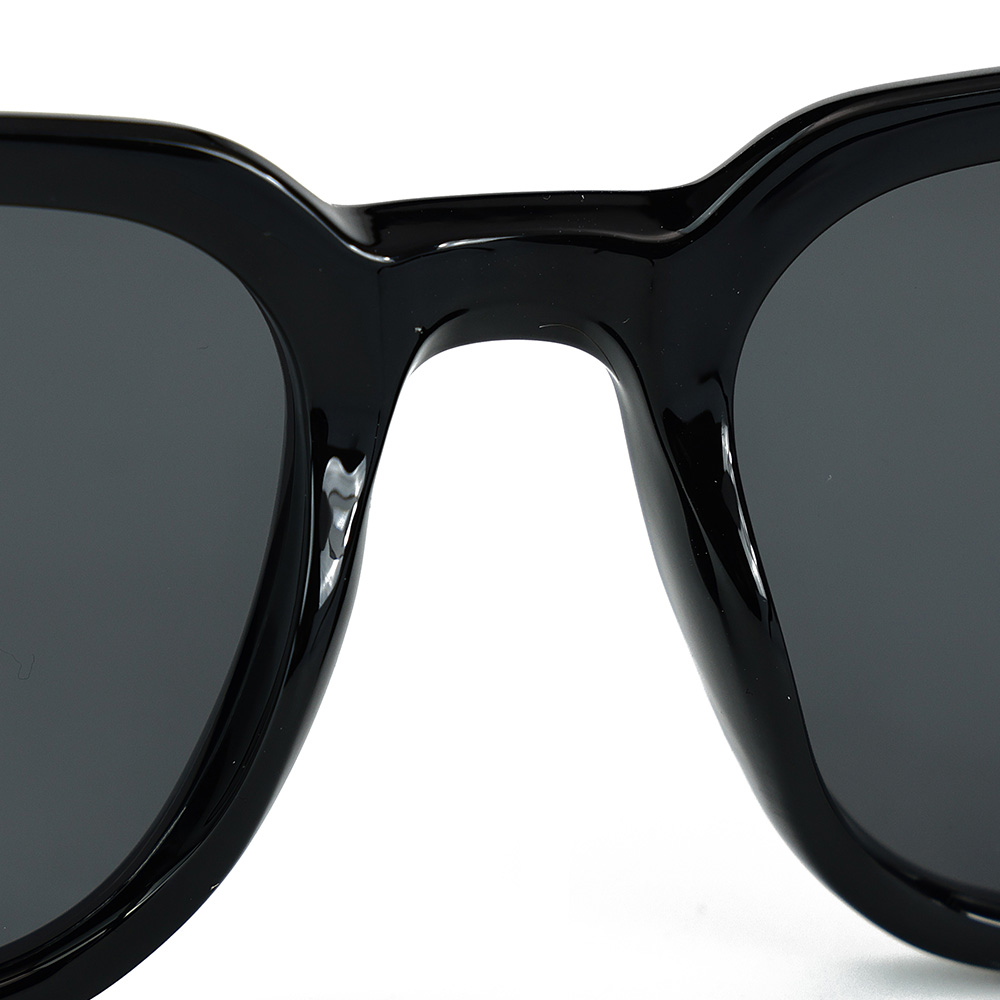
Large Square Eyeglass Frames have straight top and bottom edges meeting at sharp, nearly right angles. The sides run vertically without tapering inward toward the temples. The size places them on the larger side of the frame spectrum. The lenses extend beyond the width of the eyes, often reaching to the edges of the face or slightly past the cheekbones. This generous sizing changes how the frames interact with facial features.
Square frames stand in direct contrast to round frames, oval frames, or cat-eye designs. Their geometry does not follow the curves of the face. Instead, they introduce straight lines into the visual field, creating a deliberate counterpoint to the facial structure. Frame thickness varies across designs. Some large square frames use thick acetate that makes the square shape highly visible. Others use thinner metal, keeping the square silhouette recognisable while letting more of the face show through.
Why Square Frames Interact Differently with Round Faces
The relationship between frame shape and face shape relies on contrast. A round face already provides curves in abundance. Adding round frames adds more curves, resulting in a visual effect that some describe as circular or one-dimensional. Square frames achieve something different. The straight top edge creates a horizontal line across the brow that visually widens the upper face. The straight side edges draw attention to the vertical, adding length to the appearance of the face.
The angles in square frames also break up the monotony of continuous curves. When the eye moves from the face to the frames and back, it encounters a transition from round to angular and then back again. This alternation keeps the gaze moving around the face rather than settling into a single shape. The visual interest created by this contrast tends to draw positive attention. The face does not disappear into the frames, and the frames do not fight against the face.
Which Square Frame Features Work Best for Round Faces
Several specific features within the large square frame category serve round faces particularly well. Wider frames that extend slightly beyond the cheekbones create a lengthening effect, pulling attention outward and creating the illusion of narrower facial width. Frames with defined temples that sit prominently at the sides add structure that complements the overall design.
Frame thickness also affects outcomes. A medium to heavy frame makes the square shape unmistakable. Thin frames, while more subtle, may not provide enough visual contrast to change the perception of facial shape.
| Frame Feature | How It Interacts with Round Faces | General Suitability |
|---|---|---|
| Wide bridge setting | Creates separation between eyes, adds definition | Works well in cases |
| Narrow bridge setting | Brings frames closer together, can narrow eye appearance | May work for narrower faces |
| Heavy acetate material | Emphasizes angularity, adds visual weight | Suited to round faces |
| Thin wire construction | Subdues the square effect, shows more face structure | Suits those wanting subtle contrast |
| Strong temple definition | Adds side structure, balances cheek fullness | Helps create a balanced look |
| Rounded inner corners | Softens the square effect slightly | Offers a transitional option |
Colour and finish decisions influence the effect. Darker frames create stronger contrast against the skin, making the angular shape more noticeable. Lighter frames blend in more, reducing the impact of the square shape. A round-faced person wanting the definition from square frames often chooses darker colours. Those wanting a softer effect may prefer lighter, warmer tones that still carry the square shape but in a more subdued way.
Which Square Frame Features Might Present Challenges
Not every large square frame works well on a round face. Very heavy, chunky frames can overwhelm smaller features. A person with delicate eyes or a small nose may find that heavy frames dominate their face rather than complementing it. The frames become the focus rather than the face itself.
Frames that sit too high on the brow or too low on the cheeks alter facial proportions in unintended ways. Too high, and the face appears shorter. Too low, and the forehead looks elongated. The placement of the frame relative to the brow line affects how the face reads from a distance. Getting that placement right matters as much as the frame shape itself.
Extremely narrow square frames sometimes fail to provide adequate contrast. The square shape exists, but its size does not create enough visual impact to balance a round face. The frames sit inside the facial width, making the face appear wider by comparison. Wide frames generally serve round faces better than narrow ones.
How Does Frame Size Relate to Facial Proportions
Finding the right size in Large Square Eyeglass Frames involves more than picking the biggest pair on the rack. The width should ideally extend slightly past the widest part of the face. Too narrow, and the face looks wider by comparison. Too wide, and the frames extend beyond the face in a way that feels disproportionate. The sweet spot sits somewhere around the cheekbone line, where the outer edge of the frame aligns with or slightly exceeds the curve of the cheek.
Height matters too. A frame that sits low on the brow shortens the appearance of the forehead. One that sits high leaves too much space between the brow and the frame. The ideal position places the top edge somewhere along the brow line or just above it. For a round face, a frame that sits slightly higher than the natural brow can add perceived length to the overall facial shape. The depth of the frame, measured from the top to the bottom edge, should cover enough of the eye area without dropping below the cheekbone line.
The overall relationship between frame size and face size determines whether a large frame looks intentionally bold or simply too big. A person with a smaller face will reach the limits of what feels comfortable at a smaller absolute size than someone with a broader face. Frame measurements on the temple arm tell part of the story, but how the frame sits on the face matters more than the numbers printed there.
What Role Does Bridge and Nose Pad Design Play
Large square frames sit securely only when the bridge and nose pads fit correctly. A bridge that sits too high lifts the frame up the nose, changing how the lenses align with the eyes. A bridge that sits too low drops the frame down, potentially causing the bottom edge to rest on the cheeks. The ideal bridge allows the frame to sit at a comfortable height without sliding down or requiring constant adjustment.
Adjustable nose pads give some room to change the positioning. Pushing the pads inward raises the frame slightly and brings it closer to the eyes. Spreading the pads outward lowers the frame and pulls it away from the face. Small adjustments like these change how the frames interact with the rest of the face. Fixed nose pads, common in acetate frames, provide less adjustability, so the bridge design must match the face structure from the outset.
The bridge also affects how the frame looks from the front. A wide bridge creates a sense of openness between the eyes. A narrow bridge draws the eyes inward, which can work for some but narrows the appearance of the face. For round faces, a bridge that sits close to the centre often works better than one that sits far down the nose, as it maintains the relationship between the frames and the brow.
How Do Different Materials Affect Suitability
Frame materials influence both the visual effect and the wearing experience. Acetate frames offer weight and colour variety. The material can be carved into thick shapes that emphasise the square geometry. Acetate holds colour well, so frames come in a range of hues that would not work with other materials. The weight of acetate affects long-wear comfort, so larger acetate frames may feel heavier than their metal counterparts.
Metal frames offer thinner profiles and adjustable nose pads. A large square frame in metal does not carry the same visual weight as one in acetate, even with the same dimensions. The metal makes the square shape visible without making the frames look heavy. This can work well for those who want the contrast of square frames without the bulk that sometimes comes with thick acetate.
Combination frames, with metal temples and an acetate front, bring together the benefits of both materials. The front provides the square shape and colour, while the lighter metal temples reduce overall weight. This approach lets a person get the large square look without carrying the full weight of an all-acetate frame across the nose. Material choice should reflect lifestyle needs as much as aesthetic preferences.
What Everyday Considerations Come with Large Square Frames
Larger lenses mean more glass or plastic in the wearer's field of vision. Peripheral vision improves with larger frames because the lenses cover more of the visual field. This can be a genuine benefit for those who drive or work in environments where side vision matters. The larger surface area also means more lens coverage for prescription lenses.
Weight distribution affects how frames feel after several hours of wear. A large square frame that sits evenly across the nose and behind the ears will feel comfortable even after a full day. One that sits heavily on the nose or constantly slides forward will cause discomfort. Frame materials and temple design play a role here. Properly fitted large square frames should not leave marks on the nose or cause headaches.
Some frames can be fitted with prescription lenses, but larger frames come with some drawbacks for higher prescriptions. The lens thickness at the edges increases with stronger corrections, making the frames heavier. Lens materials can address some of the weight, but the cost of thinner, lighter lenses rises accordingly. Those with stronger prescriptions may want to weigh the trade-off between frame size and lens weight.
How Should Someone Approach the Selection Process
Trying multiple frame styles provides direct comparison. What looks good on a display stand may not look the same on a face. Pairs placed side by side reveal differences in fit, proportion, and overall effect that are not obvious when looking at one pair at a time. Anyone choosing large square frames should try at least a few variations in size, material, and colour before deciding.
Comfort matters as much as appearance. Frames should feel stable without pinching. The weight should distribute evenly enough that the wearer does not think about the frames after putting them on. Adjustments from a dispenser can improve the fit of many frames, so small issues should not automatically rule out a pair.
The intended use of the frames matters too. A pair worn a few hours a week for special occasions can handle different demands than a pair worn from morning to night every day. All-day wear calls for lighter materials and a more precise fit. Occasional wear allows more room for style choices that might sacrifice comfort. Dispensers who work with eyeglass frames regularly can point out aspects of fit and proportion that may not occur to someone choosing frames for themselves. Their observations often catch issues that would only become apparent after wearing the frames for a while.

Customized For Your Business
Combining fine craftsmanship with automation technology, we create glasses that are competitive in the market.
Quick Links
Information
Contact Us
-
 No. 7-1, Dengtou Industrial Zone, Duqiao Town, Linhai City, Taizhou City, Zhejiang Province
-
 +86-13666884088
-
 +86-13666884088
-
 +86-573-85505155
-
 [email protected]
Copyright © Zhejiang Zhansheng Glasses Co., Ltd.Rights Reserved.
OEM Eyeglass & Glasses Manufacturer
