
 Español
 русский
 عربى
Industry News

Where Can Eyewear Brands Source Custom Ladies Sunglasses
Author: Admin
Date: Oct 30,2026
Building a sunglasses line starts with one decision that shapes everything after it: who will make your product. Frame construction, finish consistency, lens quality, and delivery reliability all depend on the partner you choose.
Sourcing Routes at a Glance
Brands rarely rely on a single channel. Most combine two or three, depending on budget, design experience, and the level of control they need.
- Direct manufacturer partnerships for brands that want close control over design and quality.
- Trade shows and industry fairs for meeting many suppliers in a short time.
- Online B2B platforms for early research and supplier discovery.
- Sourcing agents for buyers who need local support in the manufacturing region.
- Wholesalers and distributors for small market tests using ready-made styles.
Each route balances speed, control, and effort differently. The sections below explain the trade-offs.
Working Directly With a Manufacturer
Direct partnerships remove middle layers. You speak with the team that handles tooling, assembly, and inspection, which makes it easier to adjust details during development.
OEM, ODM, and Private Label Explained
- OEM: you provide the design, technical drawings, or a reference sample, and the factory builds to your specification. This suits brands with a defined design direction.
- ODM: the factory offers existing frame designs, and you adjust colors, lens tints, logos, and packaging. Molds and patterns already exist, so the path is shorter.
- Private label: you select a ready-made model and apply your brand name. Customization is limited, but market entry is simpler.
Ask each manufacturer which model it handles comfortably. Some workshops are built for original development, while others run catalog-based orders more smoothly.
Reading a Supplier Catalog Before Writing Your Brief
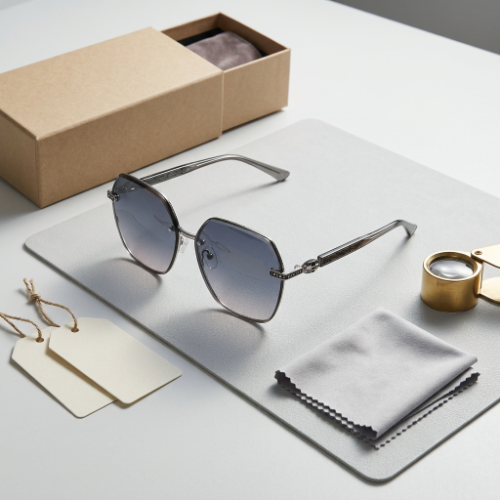
Before sending a detailed request, study how a maker presents its range. Product pages show frame styles, finishes, and lens options, and they reveal how clearly a supplier documents its work. For example, the metal non-polarized sunglasses category at Kaizi Glasses gives buyers a view of metal frame styles and lens tint choices, which can help you describe your own sample requests in more precise terms.
Trade Shows and Industry Fairs
A show floor offers what email cannot. You can handle a frame, test the hinge action, and inspect lens surfaces under real light.
Eyewear fairs take place in Asia, Europe, and North America each year, bringing together frame makers, lens suppliers, and accessory vendors. To use your time well:
- Schedule meetings in advance instead of walking the aisles without a plan.
- Bring a one-page brief covering style direction, target customer, and expected order scale.
- Photograph booths and collect cards, then record notes the same evening.
- Ask exhibitors about their experience with women's collections.
Shows demand time and travel budget. Many buyers use them to build a shortlist, then continue the conversation through sample requests.
Online B2B Platforms
Digital marketplaces let you search by product type, compare suppliers, and message several at once. They are convenient for early research.
The trade-off is uneven quality. Listings can look alike even when workshops differ widely, so treat a platform as a place to find candidates, not as proof of reliability.
Signals Worth Checking Online
- Photos of real production areas, not only polished catalog images.
- A company profile that explains products, markets, and services.
- Willingness to send samples and answer technical questions in plain language.
- Steady, consistent replies over several days.
Sourcing Agents and Wholesalers
When an Agent Adds Value
An agent works as your representative in the manufacturing region. They visit workshops, review samples, and help with communication and shipping. This suits brands without travel budget or language support. Clarify how the agent is compensated and whether they have ties to specific factories.
When a Wholesaler Fits
Wholesalers offer ready-made styles in smaller quantities. Customization is usually limited to a logo or packaging. It is a practical way to learn what your audience prefers before investing in tooling.
Comparing the Channels
| Channel | Design Control | Works Well For | Watch Out For |
|---|---|---|---|
| Direct manufacturer | Strong | Brands with a defined design plan | Requires time and technical knowledge |
| Trade shows | Medium to strong | Meeting many suppliers quickly | Travel cost and information overload |
| B2B platforms | Varies | Early research and comparison | Uneven supplier quality |
| Sourcing agents | Medium | Remote buyers needing local support | Unclear fees or hidden ties |
| Wholesalers | Limited | Small market tests | Few customization options |
More control generally means more work on your side. Choose the route that fits the resources you have today.
A Supplier Vetting Framework
A responsive sales contact is not the same as a dependable partner. These steps help you tell the difference.
- Request samples. Judge hinge feel, surface finish, lens clarity, and how the frame sits on the face.
- Ask about quality control. A reliable maker can describe what is inspected during and after production.
- Review materials. Ask what the frame and lens materials are and whether safety documentation is available.
- Request UV testing documents. Sunglasses sold in many markets must meet local rules, so ask for supporting reports.
- Check past work. Find out whether they have served brands similar to yours.
- Test communication. Send a detailed technical question and note how clearly and promptly they answer.
- Confirm ownership. Record in writing who owns designs, molds, and artwork.
Documentation to Understand
Rules differ by region. Some markets treat sunglasses as general consumer goods, while others apply labeling and testing requirements. Confirm what your target market expects before shipping. A professional supplier will welcome these questions.
Product Planning for Women's Collections
Sourcing is more than procurement. The decisions you make with a supplier shape how the product feels in daily use.
Fit and Comfort
Face shapes vary widely, so ask about available size ranges and whether nose pads or temple curves can be adjusted.
Color and Finish
Lens tints, frame colors, and surface textures change with trends. Ask which finishing options exist and how consistent colors stay between batches. Metal frames add another point to discuss, since plating and surface treatments can vary from run to run. Reviewing sample ranges, such as those shown by Kaizi Glasses, helps you explain the look you want in clear, practical language.
Packaging and Small Details
Cases, cloths, hang tags, and boxes shape the initial impression and protect products in transit. Discuss them early, since they often need separate vendors and their own schedules.
Common Sourcing Mistakes
- Skipping samples and moving straight to a bulk order.
- Choosing on price alone, then finding uneven finishing.
- Writing vague briefs that result in repeated revisions.
- Ignoring market rules for labeling and testing.
- Underestimating logistics, including customs, packaging, and delivery steps.
- Changing details late, which can disrupt production plans.
Most of these come from rushing. A careful start saves more time than it costs.
From Sample to Shipment: A Simple Workflow
Every project differs, but the flow usually looks like this:
- Define your target customer, style direction, and budget.
- Shortlist suppliers through shows, platforms, or referrals.
- Share your design brief and request quotations.
- Review samples and refine details.
- Approve a pre-production sample.
- Begin production with inspections along the way.
- Prepare packaging, documents, and shipping.
Allow room for delays. Revisions, holidays, and transport schedules all affect the calendar.
Frequently Asked Questions
What does it mean to source custom ladies sunglasses?
It means working with a manufacturer or supplier to produce sunglasses with your own design, branding, or modifications. The scope can range from adding a logo to developing a new frame shape.
Should I choose OEM or ODM?
It depends on your design experience and goals. OEM offers more creative control. ODM gives a smoother start by building on existing styles.
Can a small brand work with a factory?
Many manufacturers work with emerging brands, though terms vary. Share your plans openly and ask what flexibility is available for initial orders.
How can I protect my designs?
Use written agreements covering design ownership, molds, and confidentiality. Legal advice is worth considering, especially for cross-border projects.
What should I include when requesting a quotation?
Provide clear drawings or references, preferred materials, lens type, logo placement, packaging needs, and target market. More detail leads to a more accurate quotation.
Do I need to visit the factory?
A visit is useful but not always possible. Video calls, third-party inspections, and detailed samples can fill the gap.

Customized For Your Business
Combining fine craftsmanship with automation technology, we create glasses that are competitive in the market.
Quick Links
Information
Contact Us
-
 No. 7-1, Dengtou Industrial Zone, Duqiao Town, Linhai City, Taizhou City, Zhejiang Province
-
 +86-13666884088
-
 +86-13666884088
-
 +86-573-85505155
-
 [email protected]
Copyright © Zhejiang Zhansheng Glasses Co., Ltd.Rights Reserved.
OEM Eyeglass & Glasses Manufacturer
