
 Español
 русский
 عربى
Industry News

Do Dark Sunglasses Offer More UV Protection for Women
Author: Admin
Date: Oct 23,2026
Shopping for womens dark sunglasses often comes with one quiet assumption: the darker the lens, the stronger the shield against the sun. It sounds logical. A deep tint feels like a thicker curtain for your eyes. But tint and UV protection are two separate things, and mixing them up can lead to poor buying choices.
Darkness and UV Protection Are Not the Same Thing
Dark lenses do not automatically block more ultraviolet light. Lens color controls how much visible light reaches your eyes. UV protection is handled by the lens material, a built-in filter, or a coating that is applied during manufacturing.
Think of it like a window. A tinted car window can look very dark, yet still let some UV through. A clear window with a UV-filtering layer can block a large share of it. You cannot judge the filter by looking at the shade.
Gender does not change this either. UV light affects every person's eyes and skin in the same basic way. What differs is frame size, face shape, and style preference, which can affect how much coverage you get.
How UV Light Affects Your Eyes and the Skin Around Them
Before comparing lenses, it helps to know what you are protecting against.
The Two Types of UV Rays That Matter
Two kinds of ultraviolet rays reach the ground:
- UVA rays penetrate deeper into tissue and are linked to long-term changes in the eye and skin.
- UVB rays are more intense on the surface and are tied to short-term irritation, such as a sunburn on the eyelid.
A well-made pair of sunglasses is designed to filter both. Sunglasses that only reduce brightness do not do this job.
Why the Eye Area Deserves Attention
The skin around your eyes is thin. It tends to show sun-related changes earlier than other areas of the face. Many women look for sunglasses not only for comfort but also to help reduce squinting and shield this delicate area. Squinting repeatedly may also contribute to fine lines over time, so good coverage can support your daily skincare habits.
The Hidden Risk of Dark Lenses Without UV Filtering
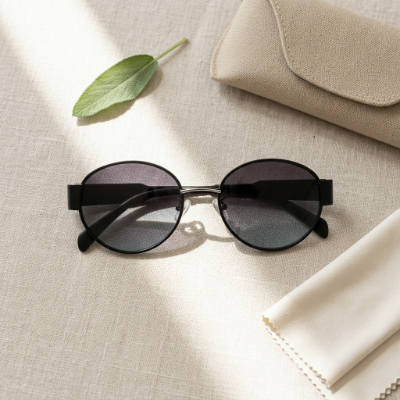
This is the part many shoppers miss. A dark lens without proper UV filtering can actually be a problem.
In bright light, your pupils get smaller. Behind a dark lens, your pupils open wider because less visible light arrives. If that lens lets UV pass through, more of it can enter the eye than if you wore no glasses on a very bright day. The dark tint creates a false sense of safety.
That is why a label or tag showing UV protection matters more than how dark the lens looks. A lightly tinted lens with a proper UV filter can protect better than a very dark lens without one.
What Actually Determines UV Protection
Here is a plain-language look at the factors that count.
Lens Material and Built-In Filters
Many modern lens materials, such as polycarbonate, naturally block a large portion of UV light. Others rely on a dye or a coating. The method varies by manufacturer, so the label is a dependable guide.
Coatings and Treatments
Some lenses carry a UV-blocking layer. Others may include anti-glare or scratch-resistant treatments. Scratches can affect clarity and comfort, so a durable surface helps lenses stay useful for longer.
Polarization: Helpful, But Different
Polarized lenses reduce glare from flat surfaces like water, wet roads, and car hoods. This improves comfort. It does not mean UV is blocked. Polarization and UV protection are separate features, and a pair can have one without the other.
Tint vs. UV Protection: A Quick Comparison
| Lens Trait | What It Does | Does It Block UV? |
|---|---|---|
| Dark tint | Reduces visible brightness | Not by itself |
| Light tint | Allows more visible light through | Can, if a UV filter is included |
| Polarized | Cuts glare from reflective surfaces | Not by itself |
| UV filter or coating | Blocks ultraviolet rays | Yes, this is its purpose |
| Mirror coating | Reflects some visible light | Not by itself |
A UV filter is the feature that protects. Tint, polarization, and mirror finishes mainly change comfort and appearance.
Why Frame Design Matters for Women
Lenses are only part of the story. UV can reach your eyes from the sides, from above, and by bouncing off surfaces like sand, snow, and pavement.
Coverage and Fit
Frames that sit close to the face and cover the brow and cheekbone area can reduce stray light. Larger shapes and wraparound styles often provide more coverage than small, narrow ones. This is one reason oversized and curved designs remain popular in many women's collections.
Face Shape Considerations
A good fit helps coverage and comfort:
- Round faces often suit angular or square frames.
- Square faces may look balanced in rounded or cat-eye shapes.
- Oval faces can wear many shapes comfortably.
- Heart-shaped faces often work well with light frames that are wider at the bottom.
Style should feel like you. But if you spend long hours outdoors, pick a shape that also shields the sides of your eyes.
When Dark Lenses Make Sense
Dark tints are not a bad choice. They simply serve a different purpose from UV filtering. They suit certain situations well:
- Bright, open spaces such as beaches, parks, and open roads.
- Driving in strong sun, where glare can strain the eyes.
- Snowy or reflective settings, where brightness feels intense.
- Light-sensitive eyes, where extra tint adds comfort.
On the other hand, very dark lenses may feel too heavy in cloudy weather, at dusk, or when moving between shaded and sunny areas. A medium tint can be easier for everyday use.
If you like the look of womens dark sunglasses, choose a pair that clearly states its UV protection rather than relying on shade alone.
A Simple Checklist Before You Buy
Use these steps in a store or when browsing online:
- Look for a UV label. Reliable products state their UV protection on a tag, sticker, or product page.
- Check the source. Buy from sellers or makers who explain how their lenses are made and tested.
- Inspect the lens surface. It should be smooth, clear, and free from distortion.
- Try the fit. The frame should sit comfortably without pinching or slipping.
- Consider your daily use. Driving, travel, sports, and city walks call for different features.
- Think about coverage. Wider or curved frames can shield more of the eye area.
A Quick Home Test to Avoid
Some people try to check UV protection by holding sunglasses up to a light or by judging how dark they look. These tricks are not reliable. Only proper testing can confirm UV filtering, so rely on product information from trustworthy sources.
Common Myths About Sunglasses and UV
"Expensive Pairs Always Protect More"
Price does not reliably reflect UV protection. Cost may be tied to brand, materials, design, or extra features. A moderately priced pair with a proper filter can protect as well as a costly one.
"I Only Need Sunglasses on Sunny Days"
UV is present on cloudy days too. Clouds can reduce brightness while still letting a portion of UV through. Wearing sunglasses on overcast days can still be helpful, especially during long outdoor hours.
"Children Do Not Need Them"
Young eyes are still developing, and they often spend more time outdoors. Many eye care professionals encourage sunglasses for kids as part of a healthy routine.
"Lighter Lenses Are Less Safe"
Not true. A light-tinted lens with a UV filter can protect your eyes just as well as a dark one with the same filter. The color is a matter of comfort and style.
Caring for Your Sunglasses So They Last
Good habits help your lenses stay clear and comfortable.
- Rinse with clean water before wiping to remove grit.
- Use a soft microfiber cloth, not paper towels or clothing.
- Store them in a case to avoid scratches and bending.
- Avoid leaving them on a car dashboard in strong heat.
- Replace them if the lenses are deeply scratched or the coating looks worn.
Over time, heavy scratches and surface wear may affect both clarity and comfort. A replacement is a reasonable step when this happens.
Frequently Asked Questions
Do darker lenses block more UV rays?
No. Darkness affects visible light only. UV protection comes from a filter built into the lens or applied as a coating.
Are women's sunglasses different from men's in terms of UV protection?
The UV filtering technology is the same. Differences usually involve frame size, shape, and style. Choose by fit and by the UV information on the label.
Can I wear sunglasses with prescription lenses?
Yes. Many prescription lens options include UV filtering or can be paired with tinted layers. An eye care professional can explain the available choices.
How do I know if my old sunglasses still protect me?
If the lenses are scratched, faded, or worn, the protection may have changed. When in doubt, an optical shop can test them with proper equipment.
Is a mirror finish better for UV?
A mirror finish reflects part of the visible light and changes the look of the lens. It does not replace a UV filter.
How should I choose womens dark sunglasses for daily wear?
Start with the UV information on the label, then check the fit and coverage. Once those two points are covered, pick the tint and shape that suit your routine and your style.

Customized For Your Business
Combining fine craftsmanship with automation technology, we create glasses that are competitive in the market.
Quick Links
Information
Contact Us
-
 No. 7-1, Dengtou Industrial Zone, Duqiao Town, Linhai City, Taizhou City, Zhejiang Province
-
 +86-13666884088
-
 +86-13666884088
-
 +86-573-85505155
-
 [email protected]
Copyright © Zhejiang Zhansheng Glasses Co., Ltd.Rights Reserved.
OEM Eyeglass & Glasses Manufacturer
