
 Español
 русский
 عربى
عربىIndustry News

How Do Blue-Light-Blocking Glasses FactoryyDesign Glasses
Author: Admin
Date: May 08,2026
Screens have become part of everyday routines, whether at work, in study, or during general communication. With that shift, people have started paying more attention to how long they stay in front of digital devices and how light from those screens interacts with the eyes over time.
Blue Light Blocking Glasses are designed around that kind of usage environment. Instead of changing how devices work, they sit in front of the visual path and slightly adjust how light is received. In the eyewear production chain, manufacturing and design practices connected with Zhejiang Zhansheng Glasses Co., Ltd. are sometimes referenced in relation to structured development of this type of product.
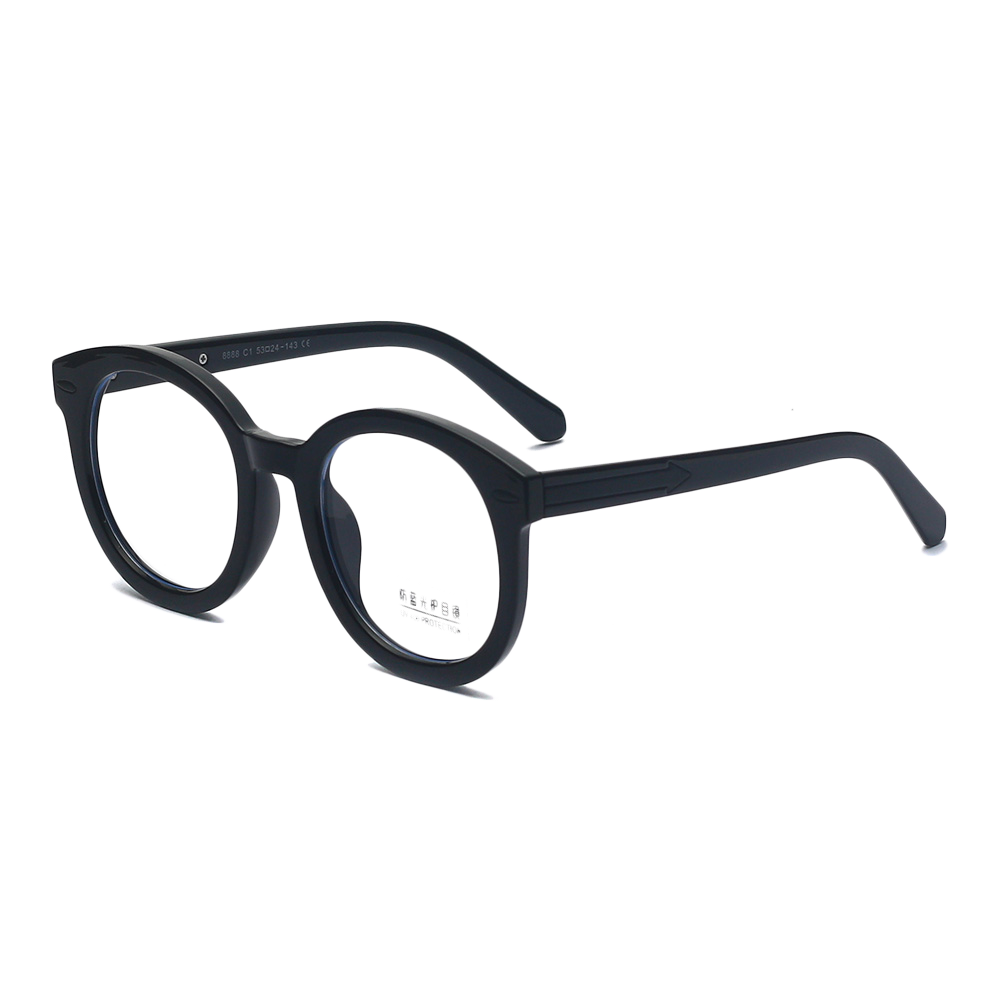
How Blue Light Blocking Glasses Reduce Screen Light Exposure
When a screen is turned on, it emits a mix of light components, and part of that falls into the blue light range. Blue Light Blocking Glasses do not remove the screen light entirely. Instead, they modify how part of that light passes through the lens.
The lens surface acts like a controlled filter layer. Some wavelengths pass through more freely, while others are partially reduced depending on how the lens structure is built. This is a gradual process rather than a hard block, which is why the screen is still visible while the visual tone may feel slightly adjusted.
In real use, people often notice small changes such as:
- screen brightness feeling less sharp on the eyes
- text appearing slightly more stable during long reading
- reduced visual tension when switching between screen and surroundings
- longer viewing sessions feeling less visually demanding
The key point is balance. The lens is not designed to remove clarity, but to moderate how intense screen light feels during extended exposure.
Lens Coating Technology Development In Blue-Light-Blocking Glasses Factory
Inside a Blue-Light-Blocking Glasses Factory, one of the more sensitive stages is lens coating. This is where the filtering behavior is shaped. The base lens is already formed, but the coating determines how it interacts with incoming light.
Coating layers are applied in very thin structures on the lens surface. Each layer has a slightly different role. Some layers reflect parts of the light spectrum, while others help maintain transparency so that vision does not become unclear or overly tinted.
The challenge in this stage is consistency. If coating distribution is uneven, the visual result can feel different from lens to lens. Because of that, the process is usually controlled in a way that keeps surface behavior stable across production batches.
In practical terms, coating development usually focuses on:
- keeping light interaction stable across the lens surface
- maintaining clarity while adjusting specific light ranges
- ensuring the coating stays attached during daily cleaning
- reducing variation between different production batches
| Layer Function | What It Does | Effect During Use |
|---|---|---|
| Light Adjustment Layer | Interacts with blue light range | Changes screen light perception slightly |
| Surface Protection Layer | Supports lens durability | Helps resist daily wear |
| Transparency Balance Layer | Maintains visibility | Keeps image clarity stable |
These layers do not work separately in use. They behave like a stacked system that influences how light passes through the lens as a whole.
Raw Material Processing To Lens Production
Before a lens becomes part of a finished pair of glasses, it goes through several preparation steps starting from raw material. The initial material is shaped into a basic optical form that can later be refined.
At the early stage, shaping is important because it defines how evenly the lens will behave later. If the form is not stable, later coating and polishing steps may not produce consistent results.
After shaping, the surface is gradually refined. This step focuses on reducing roughness and improving clarity so that light can pass through without unnecessary distortion. It is a careful adjustment process rather than a single action.
Once the surface is ready, coating is applied. This is where the light control characteristics are introduced. The coating interacts with the polished surface and creates the final optical behavior of the lens.
The general flow can be described in a simple sequence:
- shaping of raw lens material
- surface refinement and polishing
- application of coating layers
- final adjustment of optical clarity
Each stage builds on the previous one. If early steps are unstable, later optical performance can be affected even if coating is done correctly.
Frame Production And Structural Design Process
While lenses deal with how light is handled, frames are responsible for how the glasses sit and behave during actual wear. In practice, frame production is not only about shape, but also about how the structure interacts with long-term use.
Different frame materials behave in different ways. Some materials bend slightly under pressure and return to shape, while others stay more rigid and hold their form. The selection depends on how the glasses are expected to be used in daily environments such as offices, study spaces, or mobile work settings.
During production, the frame is formed into a basic structure, then adjusted to match lens fitting requirements. This alignment step is more important than it looks, because even small differences in positioning can affect comfort and visual alignment during use.
Comfort is not treated as a single feature but as a result of several small decisions. Pressure around the nose bridge, contact behind the ears, and overall balance of weight distribution all contribute to how the glasses feel after extended wearing time.
Typical considerations during frame development include:
- keeping structure stable during repeated use
- balancing flexibility and rigidity in material selection
- ensuring lens and frame alignment stays consistent
- adjusting fit for different face shapes and wearing habits
- reducing uneven pressure points during long wear
Frames and lenses are designed as one combined system. If either side is not properly matched, the overall wearing experience can feel less stable even if each part works individually.
How Blue-Light-Blocking Glasses Factory Designs Glasses For Customers
Inside a Blue-Light-Blocking Glasses Factory, product design is not treated as a single fixed model. Instead, it is often shaped around different usage habits. The idea behind Design Glasses For Customers is to adjust structure and optical behavior based on how people actually use screens in daily life.
Some users spend long hours in front of computers, while others switch frequently between indoor and outdoor environments. These differences influence how lenses and frames are designed. The goal is not to create one universal structure, but to adjust combinations that match different routines.
In design planning, attention is often given to:
- how long the glasses are typically worn during screen use
- whether usage is mostly stationary or frequently moving
- how sensitive the user is to screen brightness changes
- how much visual clarity is required for detailed tasks
- how frame comfort affects long wearing periods
Design decisions are usually made by balancing optical behavior and physical structure. A slightly stronger filtering lens may feel different under bright screen conditions compared with a more neutral lens, so matching is done based on expected environment rather than a single fixed setting.
Application Scenarios Of Blue Light Blocking Glasses
Blue Light Blocking Glasses are used in situations where screen exposure is part of routine activity. These environments are not limited to one type of workplace or activity, but appear across many daily settings.
In office environments, screens are often used for long periods without frequent breaks. In this case, glasses are mainly used to reduce visual intensity from continuous display exposure.
In study environments, reading and digital learning materials are often viewed for extended time. Here, visual stability becomes more relevant than short-term viewing.
In general device usage, such as mobile phones or tablets, screen distance changes frequently. The glasses help maintain a more consistent visual feeling even when viewing distance is not fixed.
Common usage situations include:
- office screen-based tasks
- digital reading and learning sessions
- mobile device browsing and communication
- long duration computer-based work
- mixed indoor lighting environments with screen use
- Manufacturing Consistency And Production Control
In eyewear production, consistency is not only about final appearance. It is also about how each lens and frame behaves when used over time. Small differences during production can influence visual experience later.
For lens coating, uniform application is important so that light interaction remains similar across different units. If coating thickness varies too much, visual response may feel slightly different between pairs.
For frame assembly, alignment accuracy plays a similar role. Even small shifts in positioning can affect how the glasses sit on the face and how stable they feel during movement.
Production control usually focuses on:
- maintaining stable coating distribution on lens surfaces
- checking lens clarity after each processing stage
- ensuring frame alignment remains within acceptable range
- reducing variation between repeated production cycles
- observing material behavior during assembly
These steps are not separate events but part of a continuous control process that runs through the entire manufacturing flow.

Customized For Your Business
Combining fine craftsmanship with automation technology, we create glasses that are competitive in the market.
Quick Links
Information
Contact Us
-
 No. 7-1, Dengtou Industrial Zone, Duqiao Town, Linhai City, Taizhou City, Zhejiang Province
-
 +86-13666884088
-
 +86-13666884088
-
 +86-573-85505155
-
 [email protected]
Copyright © Zhejiang Zhansheng Glasses Co., Ltd.Rights Reserved.
OEM Eyeglass & Glasses Manufacturer
