
 Español
 русский
 عربى
عربىIndustry News

How Will You Choose Your Next Pair Of Glasses?
Author: Admin
Date: Oct 11,2025
Standing in front of an eyewear store window, or scrolling through a dazzling array of online shopping pages on your phone, we are faced with an high quality choice. Once upon a time, choosing a pair of prescription glasses simply meant getting an eye exam, selecting the frame shape and material, and then waiting for it to be made. Today, this decision has become incredibly complex, yet incredibly fascinating. We stand at a crossroads: one path guides to a future driven by algorithms and sensors, another to a scientific fortress centered on visual health, and yet another to a fashion runway showcasing individuality and aesthetics. So, how should I choose my next pair of glasses?
To delve deeper into this choice, let's break down these three options and engage in an in-depth dialogue from multiple perspectives.
Argument One: Smart Functional Glasses - Technology on Your Wrist Now on Your Nose
These products can be collectively called Smart functional glasses. They no longer satisfy the single function of correcting vision, but aspire to become your personal visual center and auditory assistant.
1. Core Functionality Beyond Vision:
Enhanced Hearing and Privacy Communication: Many smart functional glasses integrate miniature speakers and microphones, allowing you to directly answer calls, listen to music, or interact with your phone's voice assistant. Their bone conduction or open acoustic technology ensures you perceive sound without isolating yourself from ambient noise, guaranteeing safety while traveling. More importantly, private calls in public places become more discreet than ever before.
Real-Time Information Display: This is a step from science fiction to reality. Through a miniature AR (Augmented Reality) display, you can see navigation instructions, text messages, schedule reminders, and even real-time translations of foreign languages in the corner of your field of vision. This means you don't need to constantly look down at your phone, making information access seamless and efficient.
Immersive Recording and Creation: Smart functional glasses with integrated HD cameras allow you to take photos and videos from a first-person perspective. Whether recording your child's first steps or capturing travel experiences, it provides a completely hands-free creative experience.
2. Real-World Challenges:
Extended Battery Anxiety: Your phone and smartwatch may need daily charging; now your prescription glasses join that ranks. For heavy users, forgetting to charge might mean returning to primitive status the next day.
The Gray Area of Privacy and Social Etiquette: While convenient, built-in cameras raise concerns about the privacy of others. Taking photos without permission could cause conflict and distrust in social situations.
Price and Upgrade Frequency: Technological products iterate rapidly and are expensive. A top-of-the-line pair of smart functional glasses can cost several times more than traditional glasses, but its core technology may become obsolete within a year. Are you ready to replace your prescription glasses like you would a mobile phone?
Argument Two: Anti-Myopia Glasses - A Proactive Defense for Visual Health
If smart functional glasses are about expanding functionality, then anti-myopia glasses are about protection and intervention. They are primarily aimed at teenagers in the critical period of visual development and adults who need to spend long hours in front of digital screens.
1. The Underlying Scientific Principles:
- Solving the Accommodative Lag Problem: Traditional single-vision lenses cause a slight lag in the eye's accommodation when viewing near objects, potentially causing elongation of the axial length and exacerbating myopia. Anti-myopia glasses employ special designs, such as peripheral defocus technology (e.g., Essilor's Starlight or Hoya's New Learning), which not only provide clear vision in the center of the lens but also create myopic defocus in the peripheral areas, generating signals to inhibit axial elongation.
- Relieving Digital Eye Strain: For adults, another type of anti-myopia glasses may refer to lenses with blue light blocking and anti-fatigue functions. By filtering some harmful blue light and providing optimized prescription, they alleviate symptoms such as dry eyes, eye strain, and headaches caused by prolonged screen work. This can be seen as a defense against digital age myopia.
2. Clearly Defined Applicable Scenarios and Limitations:
- The Target Population is Extremely Clear: The greatest value of these glasses lies in children and adolescents whose myopia is rapidly worsening. For them, this is no longer an option but an intervention based on ophthalmologist recommendations. A pair of effective anti-myopia glasses is invaluable; it concerns a child's lifelong visual health.
- Functional Focus and Adaptability: The core mission of anti-myopia glasses is to prevent myopia; they won't play music or display information. Furthermore, wearers may need a short adjustment period to get used to the unique visual experience. Its success also highly depends on consistent wear; if the child is uncooperative, its effectiveness will be significantly reduced.
- Long-Term Value of Investing in Health: Although more expensive than regular prescription glasses, it's wise to consider it a long-term investment in health. Compared to the potential risks of future eye diseases caused by high myopia and the associated treatment costs, the current investment is extremely cost-effective.
Argument Three: Trendy Prescription Glasses - An Uncompromising Statement of Individuality and Fashion Accessory
As eyewear evolved from a medical device to a fashion item, it became an extension of appearance. A well-designed pair of prescription glasses is one of direct and effective tools for shaping one's personal image.
1. Fashion Expression and Identity:
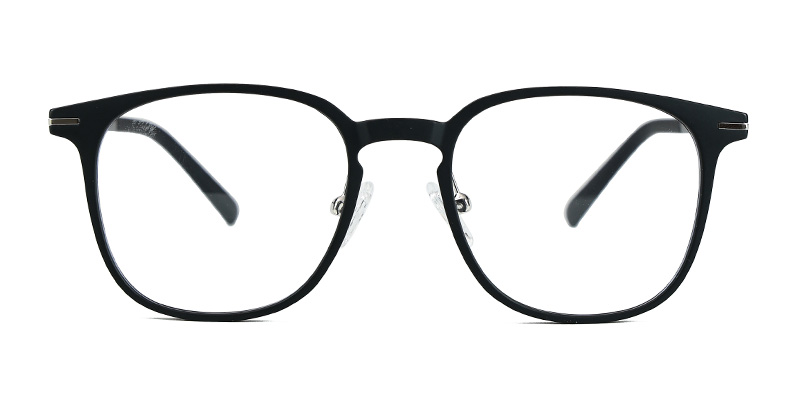
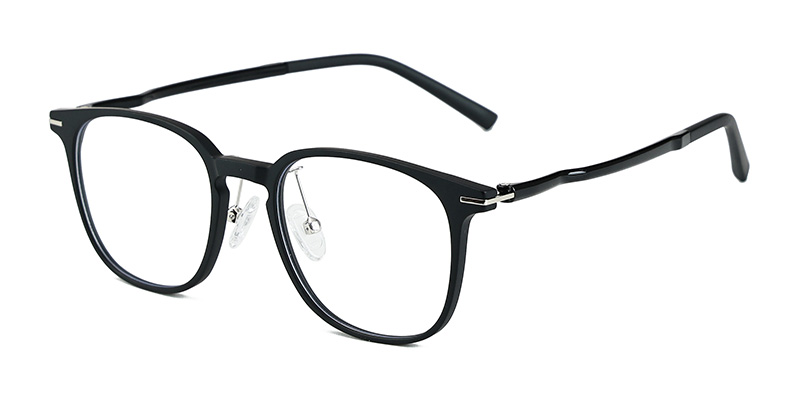
- The Partner for Your Face Shape: Choosing frames is a visual art. Round faces benefit from square frames that add definition, while square faces benefit from round frames that soften the lines. A pair of prescription glasses that goodly matches your face shape can optimize facial contours and enhance overall beauty, much like makeup.
- An Extension of Personal Style: Your glasses silently tell your story. Do you choose classic, conservative tortoiseshell acetate frames, or avant-garde, bold transparent geometric frames? Do you prefer retro round gold-rimmed glasses, or heavy, industrial-style frames? Each pair of prescription glasses is a style statement.
- The Rise of Chinese Design: The global eyewear fashion industry is experiencing a strong Eastern trend. Some outstanding Chinese designer brands cleverly combine traditional cultural elements (such as bamboo, calligraphy, and Peking Opera masks) with modern design language to create unique products. Choosing such glasses is not only about pursuing fashion, but also an expression of cultural confidence.
2. Practical Factors to Consider:
- Wardrobe Compatibility: A pair of overly distinctive glasses might require careful outfit coordination, otherwise it could look out of place. A classic, versatile prescription glasses pair, on the other hand, can seamlessly blend into your everyday attire, offering greater versatility.
- Quality and Wearing Comfort: Fashion doesn't mean sacrificing comfort. The frame material (such as lightweight beta titanium or smooth acetate), the nose pad design, and the hinge craftsmanship all directly impact the long-term wearing experience. While pursuing aesthetics, one must not overlook the fundamental qualities of a prescription glasses pair.
So, returning to the initial question: How will I choose my next pair of glasses?
My answer is: a rational fusion, not an exclusive choice.
First, I must acknowledge that visual health is an unshakeable cornerstone. If my optometrist recommends it, or if I am deeply troubled by digital eye strain, then the technology behind anti-myopia glasses will be my primary consideration when choosing lenses. A clear and comfortable prescription glasses pair is fundamentally essential.
Building on this foundation, I see fashion expression as a source of confidence. I'll take the time to find frames that goodly complement my face shape and represent my current aesthetic and attitude. It might be a design imbued with Eastern aesthetics, or a classic European style; the key is that it makes me feel this is me when I wear it.
As for smart functional glasses, I'll maintain an open but cautious attitude. I'll assess my current lifestyle and work habits to see if I truly need those features integrated into my glasses. Perhaps I'll use them as a second pair for specific occasions (like travel or sports), rather than replacing my everyday primary glasses.
My next prescription glasses will likely feature lenses with advanced anti-myopia technology (the concept of anti-myopia glasses), set within a stylish frame that reflects my personality and provides ultimate comfort (the pursuit of trendy prescription glasses). As for those cool technological features (smart functional glasses), I'll patiently wait until the technology matures, the battery life is longer, and the design is more practical for everyday wear.

Customized For Your Business
Combining fine craftsmanship with automation technology, we create glasses that are competitive in the market.
Quick Links
Information
Contact Us
-
 No. 7-1, Dengtou Industrial Zone, Duqiao Town, Linhai City, Taizhou City, Zhejiang Province
-
 +86-13666884088
-
 +86-13666884088
-
 +86-573-85505155
-
 [email protected]
Copyright © Zhejiang Zhansheng Glasses Co., Ltd.Rights Reserved.
OEM Eyeglass & Glasses Manufacturer
